Meet the Quadruple Star System That Defies Space Expectations
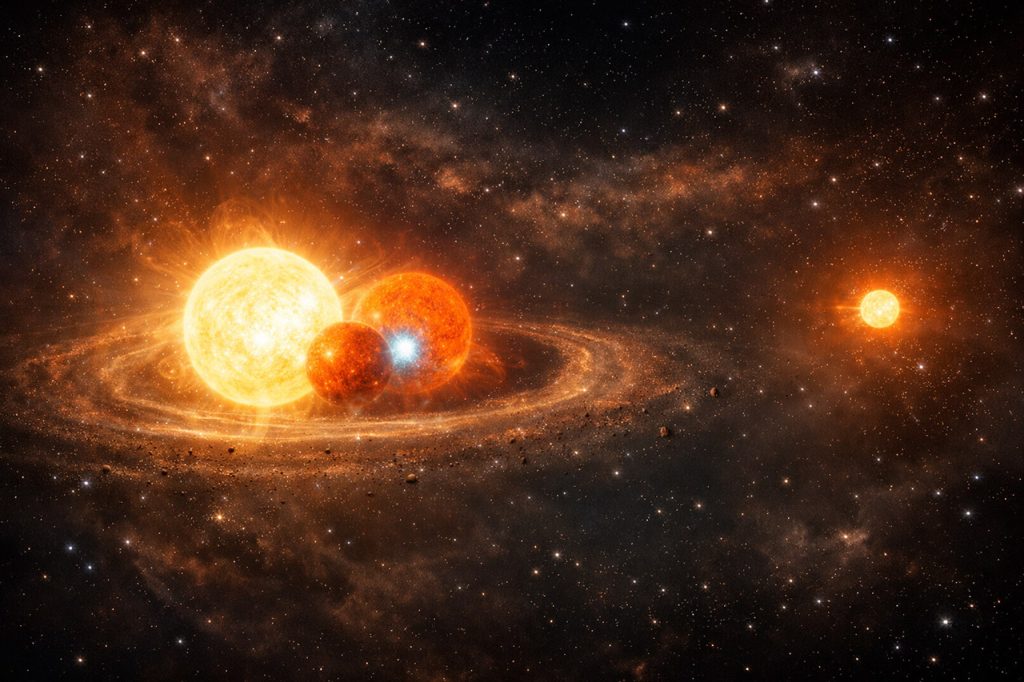
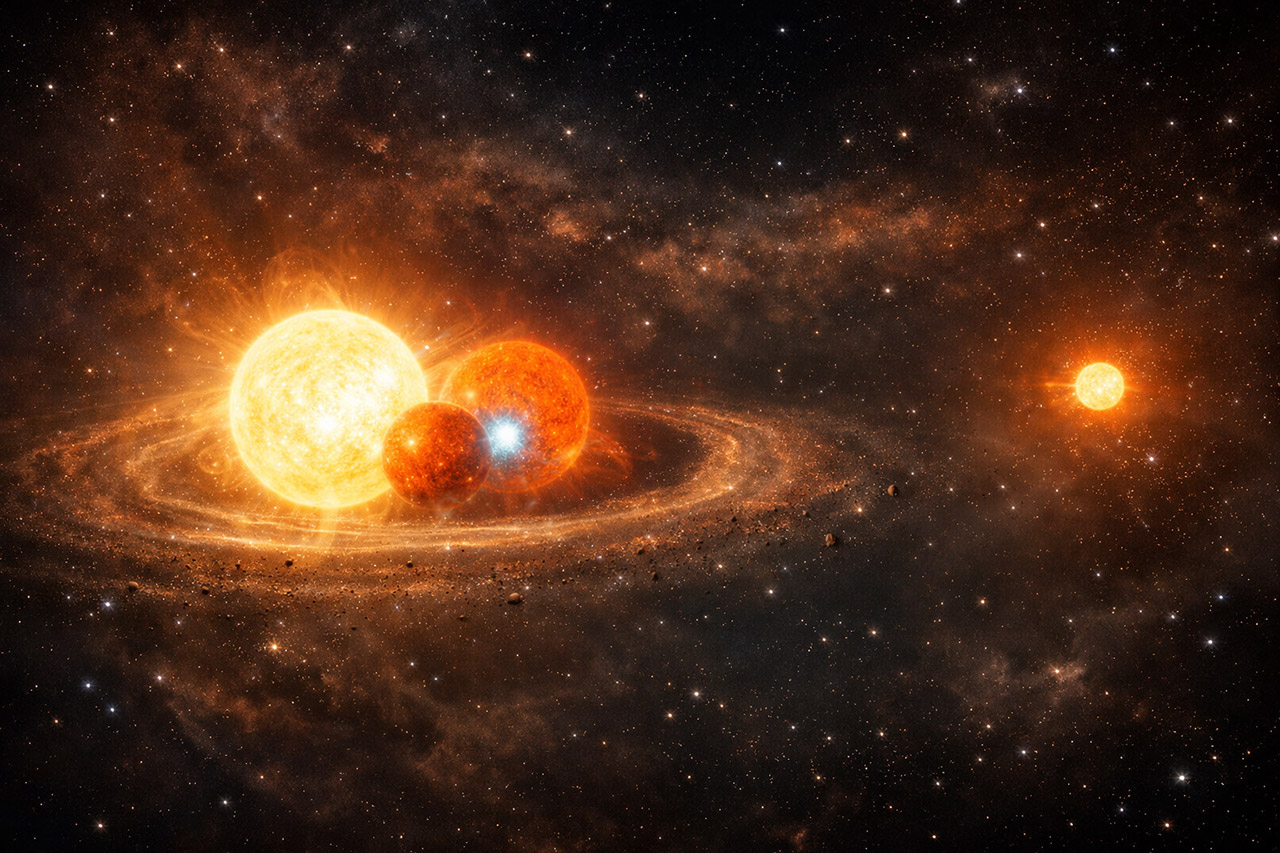
A quadruple star system known as TIC 120362137 is the most compact of its kind discovered in the universe. Four stars are trapped in an extremely tight dance that fits snuggly within the distance between our sun and Jupiter, which is a rather little space to be playing a cosmic musical chairs game with four stars in tow. Astronomers first saw this extraordinary system using data collected by NASA’s Transiting Exoplanet Survey Satellite (TESS) between 2019 and 2024. That data was then supplemented with additional observations from ground-based telescopes and spectrographs, allowing scientists to take a closer look and see how all four stars were moving.
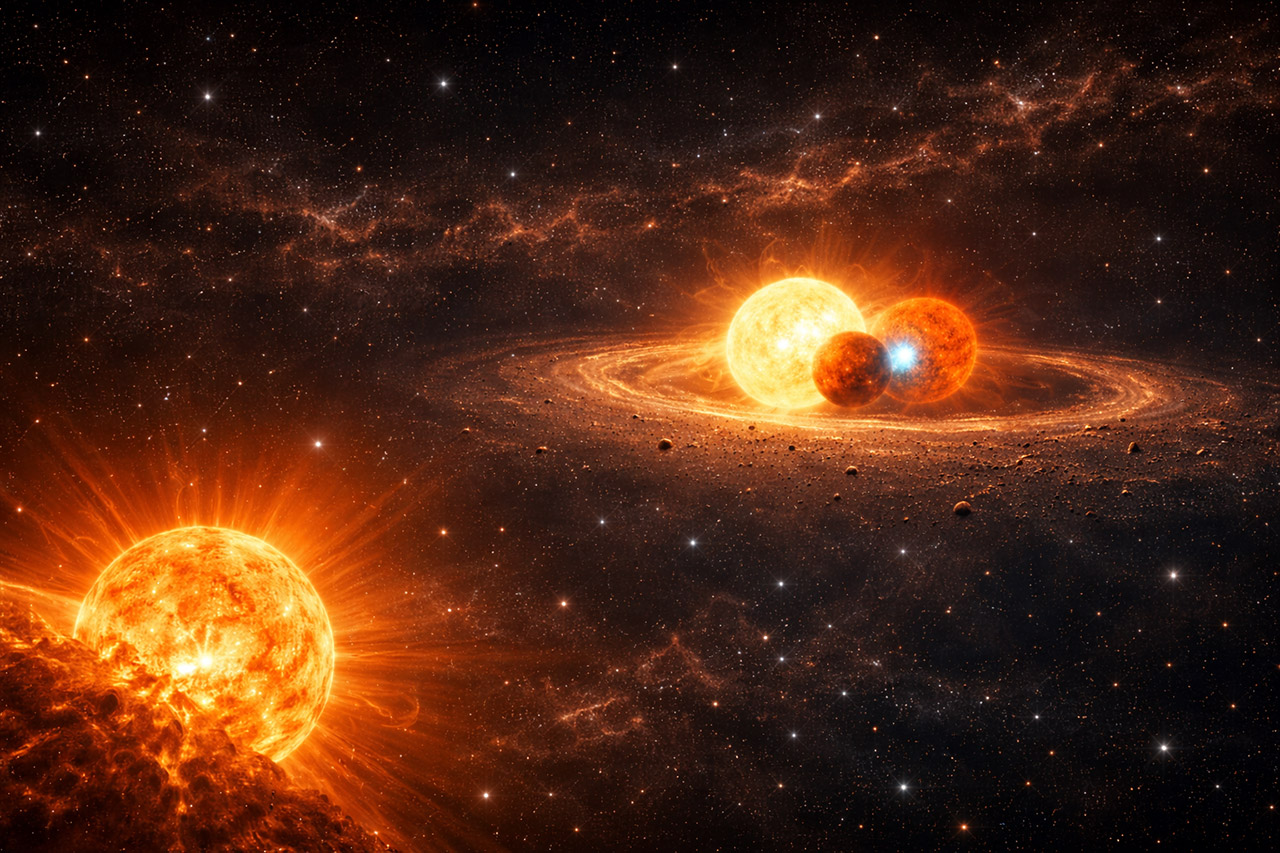
TESS first detected the system’s light curve, which displayed regular brightness dips every 3.28 days, as is typical of an eclipsing binary pair (two stars crossing in front of each other as seen from Earth). The central star in that duo is a true giant, weighing in at 1.75 times the mass of our own sun and having a radius about three times that of ours, with a blistering surface temperature of 6609 K. Its companion is no slouch either, weighing in at 1.36 solar masses, with a radius 1.5 times that of the sun, and a temperature of 6725 K. They’re like two peas in a pod, orbiting each other in near-perfect harmony, and their rotation is perfectly coordinated with the orbit.

LEGO Technic NASA Artemis Space Launch System Rocket Building Toy for Boys & Girls – STEM Learning…
- BUILD AN OFFICIAL NASA ROCKET – Kids prepare to explore outer space with the LEGO Technic NASA Artemis Space Launch System Rocket (42221) building…
- 3-STAGE ROCKET SEPARATION – Young builders can turn the hand crank to watch the rocket separate in 3 distinct stages: solid rocket boosters, core…
- STEM BUILDING TOY FOR KIDS – This educational rocket kit was created in collaboration with NASA and ESA to showcase the authentic system that will…
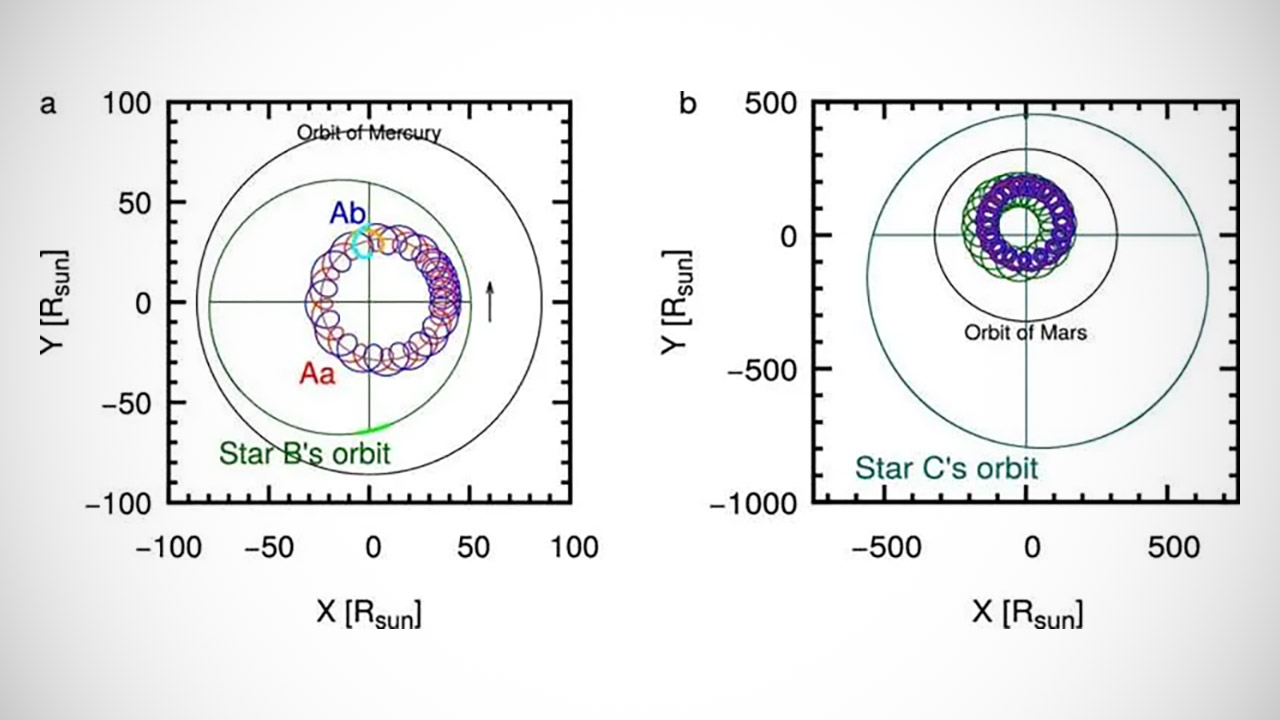
A third star joins the inner pair, forming a hierarchical triple. This star, with a mass of around 1.48 sun masses, a radius of 1.76 solar radii, and a scorching surface temperature of 6935 K, orbits the pair every 51.3 days. Now, the entire inner triple is noticeably smaller than Mercury’s orbit around our own sun. Brightness drops every 51.3 days, combined with fluctuations in eclipse timing, pretty much gave astronomers the game away; this third star either eclipses or is eclipsed by the binary. When all three stars align perfectly, you can witness intricate triple eclipses that last one to two days.
Wait, there’s more: a fourth star completes the quadruple, and this one is a fairly ordinary Sun-like companion, with about 1 solar mass, a radius of 0.93 solar radii, and a surface temperature of around 5770 K, which is not too dissimilar from our own. This star orbits the inner triple every 1046 days, which is the shortest known period for the outer component in a 3+1 quadruple system. The overall arrangement has remained stable throughout billions of years, aided by the fact that all four stars’ orbits are reasonably in-line, with mutual inclinations remaining minimal, at fractions of a degree for the inner pair and only six degrees for the outer orbit.
The good news is that all four stars exhibit different spectral lines in measurements, which is a rather remarkable feat in and of itself, and it allowed astronomers to acquire an accurate read on their velocities and attributes. According to evolutionary models, the system’s age ranges from one to two billion years. Over the next few hundred million years, the inner pair will most likely begin to grow, combine, or interact in some unusual manner, resulting in two white dwarfs orbiting each other every 44 days or so, while the outer star continues to function normally.
[Source]
Meet the Quadruple Star System That Defies Space Expectations
#Meet #Quadruple #Star #System #Defies #Space #Expectations