Inexpensive seafloor-hopping submersibles could stoke deep-sea science—and mining
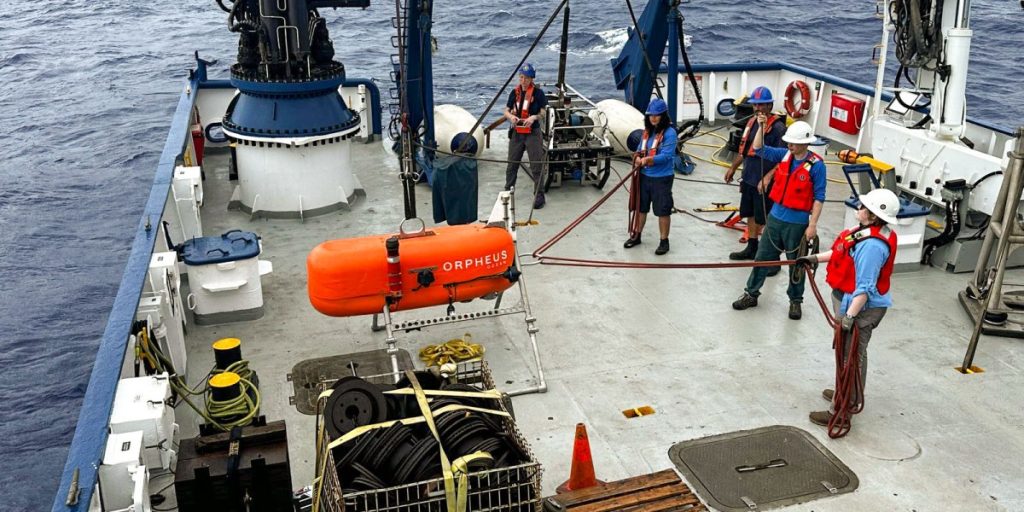
But as with any sort of new type of technology, “there’s always growing pains,” recalls Orphan. Frigid temperatures and steep topography added unseen challenges, and it took the full three weeks for the sub to get high-resolution photographs of the seeps.
The setback didn’t dull Orphan’s excitement about the potential of these machines. “There’s a lot of real, unknown science right at that interface between the sediment and the ocean surface,” she says. “The Orpheus-type class of instrument, with the right kinds of sensors and samplers, could be a very enabling tool.”
Russell envisions pairing the vehicles with specially designed payloads that can sense the heat of chemical seeps and detect plumes of sediment, DNA shed from ocean life-forms, or the magnetic tug of buried cables.
The vehicles are the “the best of both worlds,” says Andrew Sweetman, a deep-sea ecologist at the Scottish Association for Marine Science, who has not worked with Orpheus. While they can roam large areas like an AUV, they can also carry out precise sampling maneuvers like a remotely operated vehicle (ROV), a robot connected to a ship via cables that fulfills real-time human commands.
In addition to the low price tag, says Sweetman, the small size of the vessels means they don’t require a large research vessel to ferry them out to sea. That might make exploration more accessible for smaller or poorer countries without such ships, he says: “It will, in a way, help democratize deep-sea science.” He imagines using the sediment cores the submersibles gather to probe how seafloor-dwelling animals cycle nutrients—a crucial element of the ocean’s role as a carbon sink.
The mining push
As much as smaller, cheaper ocean vehicles have caught scientists’ eye, they have also piqued the interest of companies. Russell says inquiries come in weekly from businesses involved in deep-sea mining, defense, offshore wind, telecommunication, and oil and gas. He notes that Orpheus is merely a “service provider,” helping collect data where needed but not making decisions about how to use the seafloor. And he says that better data—such as information on the shape of the seafloor, the sediment quality, and the presence of life—also “raises the bars” that governments and regulators are only beginning to set.
But many scientists are far from eager about the growing push for seabed mining, which an executive order from President Donald Trump stoked further last week by mandating that the US government rapidly develop mineral exploration and processing. And earlier last month, the administration announced the creation of a new government office: the Marine Minerals Administration.
#Inexpensive #seafloorhopping #submersibles #stoke #deepsea #scienceand #mining