Elon Musk and Sam Altman are going to court over OpenAI’s future
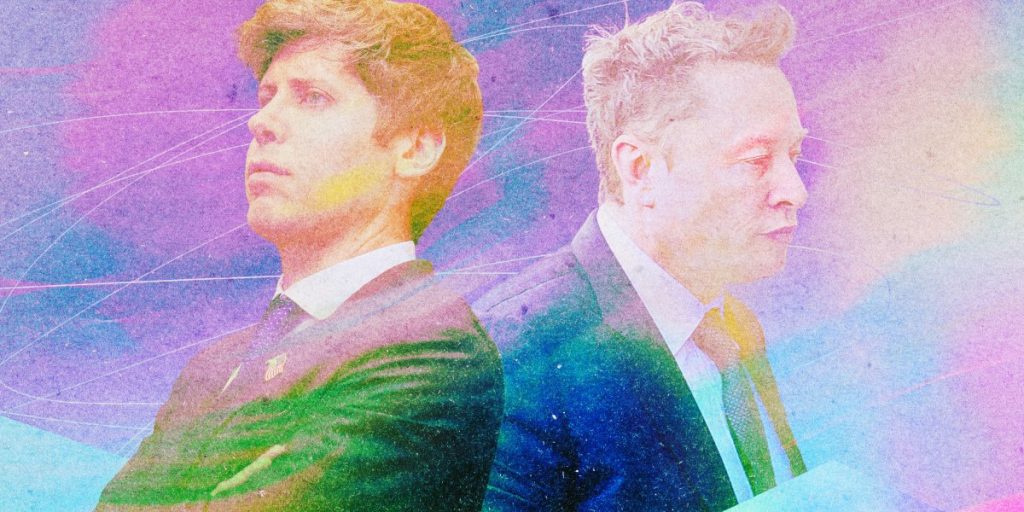
Musk is seeking as much as $134 billion in damages from OpenAI and Microsoft, one of OpenAI’s biggest financial backers. He is also asking the court to remove Altman and Brockman from their roles and to restore OpenAI as a nonprofit. Musk has asked the court to award any damages to OpenAI’s nonprofit rather than to him personally.
Nine jurors will deliver an advisory verdict, a non-binding recommendation, to guide the judge in deciding Musk’s claims against Altman. Musk, Altman, and Brockman will take the stand. Former OpenAI chief scientist Ilya Sutskever, former OpenAI CTO Mira Murati, and Microsoft CEO Satya Nadella are also expected to testify. Cringey texts, raw diary entries, and endless scheming behind the founding and growth of OpenAI are expected to come to light.
In an industry enveloped in secrecy, the trial will be a rare opportunity for the public to look behind the curtain and find out what’s going on in the companies creating the most transformative technology ever built.
What are they fighting about?
When OpenAI was originally founded as a nonprofit, backed by a $38 million donation from Musk, the company vowed to create open-source technology for the public’s benefit, unconstrained by a need to generate financial returns. But over the years, the company began to claim that intensifying competition could make it dangerous to share how it develops its AI models and that a nonprofit structure could not raise enough money to keep building AI. (MIT Technology Review was first to report on OpenAI’s internal conflicts around its mission.)
The court has already found that in 2017 Altman and Brockman wanted to establish a for-profit arm, while Musk proposed merging OpenAI with his electric-car company, Tesla. When Musk threatened to stop funding, Altman and Brockman told him that they were committed to keeping the company a nonprofit. Musk alleges that they pursued plans to pivot to a for-profit without informing him. According to OpenAI, Musk agreed that the company needed a for-profit entity and even wanted to be its CEO.
But even if Musk proves he was duped by Altman and Brockman, he may not have standing in the first place to sue them for restructuring the company to operate a for-profit subsidiary. Some legal scholars are puzzled over why the judge allowed him to bring this claim. “The idea that Elon Musk can sue because he was a donor or used to be on the board is pretty puzzling,” says Jill Horwitz, a law professor who studies nonprofit law at Northwestern University. “Typically, it’s up to the attorneys general to bring such a claim to enforce the charitable purposes. And that’s already happened.”
In October 2025, state attorneys general of California, where OpenAI is headquartered, and Delaware, where OpenAI is incorporated, struck a deal with OpenAI to approve its new corporate structure on a series of conditions. For example, a safety and security committee at the nonprofit would review safety-related decisions made by the for-profit subsidiary. Critics of the restructuring, including Musk, AI safety advocates, and civil society groups, have tried to stop it.
California’s attorney general has declined to join Musk’s lawsuit, saying that the office did not see how his action serves the public interest.
#Elon #Musk #Sam #Altman #court #OpenAIs #future