The noise we make is hurting animals. Can we learn to shut up?
Other, similarly nifty A/B tests followed. One was led by David Luther, a biologist at George Mason University (who also worked with Phillips on the covid-19 study in San Francisco). In 2015, these researchers took 17 white-crowned sparrows at birth and raised them in a lab. To teach them their species’ songs, they played the nestlings recordings of adult sparrows singing, at low and high pitches. Six of the nestlings heard the songs without any interference; with the other half, the researchers played the sounds of city noise at the same time.
The results were stark. The lucky birds that were spared the traffic noise learned to perform the quieter, sweeter, more complex songs. But the birds that had traffic noise blasted learned only the higher, faster, more stressed-out songs. From the cradle, noise changed the way they communicated.
Humans hate noise too
You can’t pull the same experiment with humans, raising them in a lab to see how noise affects them. (Not ethically, anyway.) But if we could, we’d likely find the same thing. We, too, are animals—and it appears that we suffer in similar ways from anthropogenic noise, even though we’re the ones creating it.
The sound of traffic is correlated with lousy sleep, higher blood pressure, more heart disease, and higher stress.
Stacks of research in the last few decades have found that noise—most often, as with wildlife, the sound of traffic—is correlated with lousy sleep, higher blood pressure, more heart disease, and higher stress. A Danish study followed almost 25,000 nurses for years and found that an additional 10 decibels hit them hard; over a 23-year period they had an 8% higher rate of death, plus higher rates of nearly every bad thing that could happen to you: cancers, psychiatric problems, strokes. (They controlled for other malign health influences.) As you’d probably predict by now, children fare badly too. When Barcelona researchers followed almost 3,000 elementary school kids for a year, they found that those in noisier schools performed worse on assessments of working memory and ability to pay attention.
“We think of ourselves as being ‘used to it,’” says Gail Patricelli, a professor of evolution and ecology at the University of California, Davis. “We’re not as used to it as we think we are.”
It’s also true that there’s a trade-off. Many people understand that noise from cities and highways is aggravating, but we tolerate it because we get benefits along with the hassles. Cities are crammed with jobs and connections and dating opportunities; cars and trucks bring us the things we need and increase our personal mobility.
It turns out that animals make a similar calculus. Some species appear to benefit in certain ways from proximity to noise, so they move toward it.
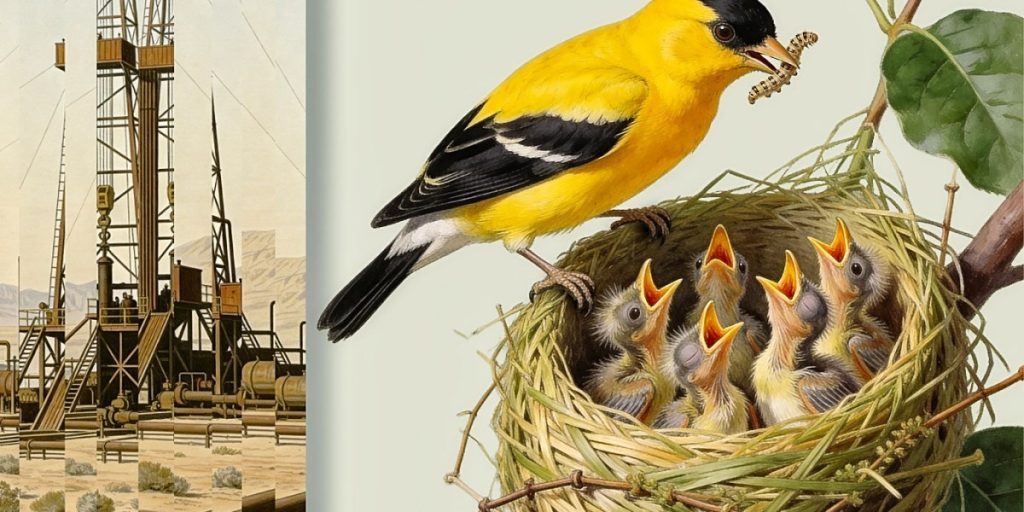
Clinton Francis, a biologist at California Polytechnic State University, and a team studied bird populations near noisy gas wells in rural New Mexico. Most species avoided the riot of the well pumps. But Francis was surprised to find that some hummingbirds and finches preferred it, and by one important measure they thrived: They were nesting more in the noisy areas than in the quieter areas. Additionally, several species had more success at fledging chicks in noisier locations.
What was going on? It’s likely that the noise makes it harder for predators to hear the birds and hunt down their nests. “It’s essentially a predator shield,” Francis says. Since his research found that predators can cause as much as 76% of failures of eggs to produce healthy offspring, that’s a significant survival advantage.
#noise #hurting #animals #learn #shut