Webb Captures Twin Snapshots of Worlds in the Making
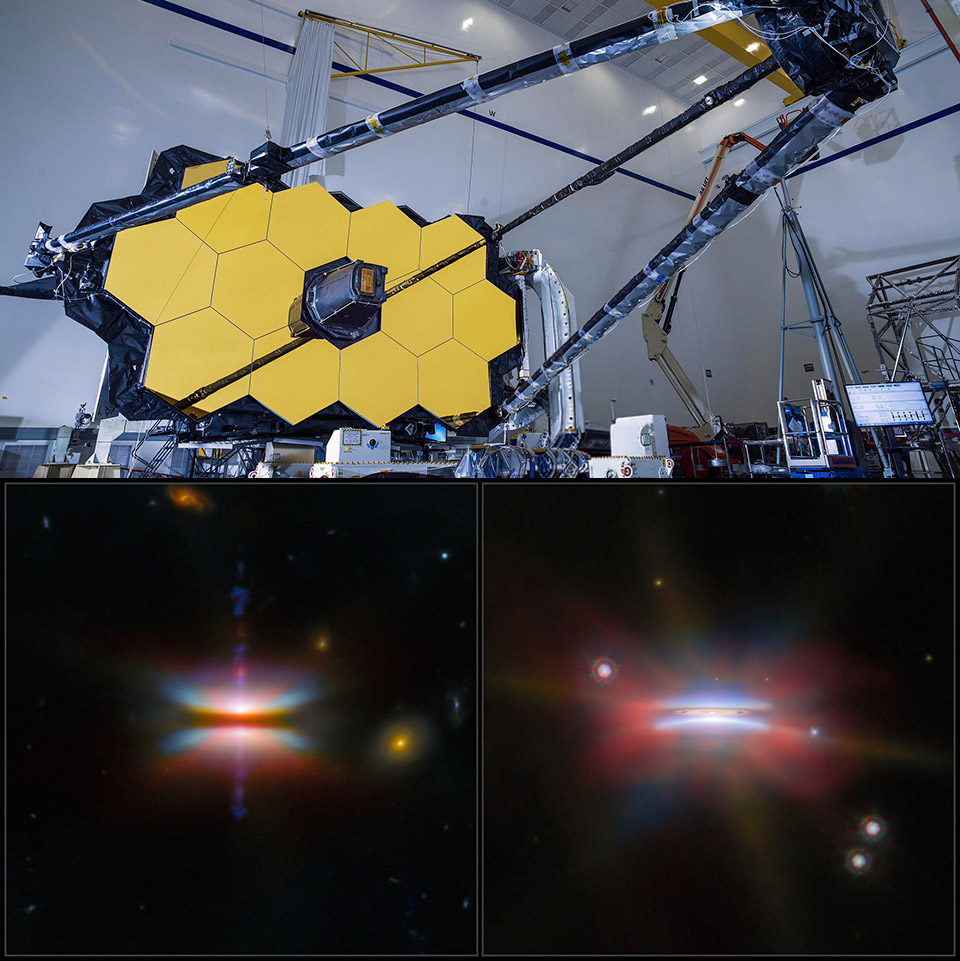
Photo credit: NASA/Chris Gunn
Astronomers have just released a new set of images from NASA’s James Webb Space Telescope that show two young stars surrounded by all of the raw material that is used to form planets. On the left is the disk around the star Tau 042021, which is 450 light years away in the direction of Taurus. In the center, a dark band stretches out where the disk blocks the star’s light. Above and below you can see these massive, bright material cones. Then there’s this small jet shooting straight up and down, and it’s all made up of different sizes of dust particles, as well as fragments of hydrogen, carbon monoxide, and other chemicals recognized in the infrared.
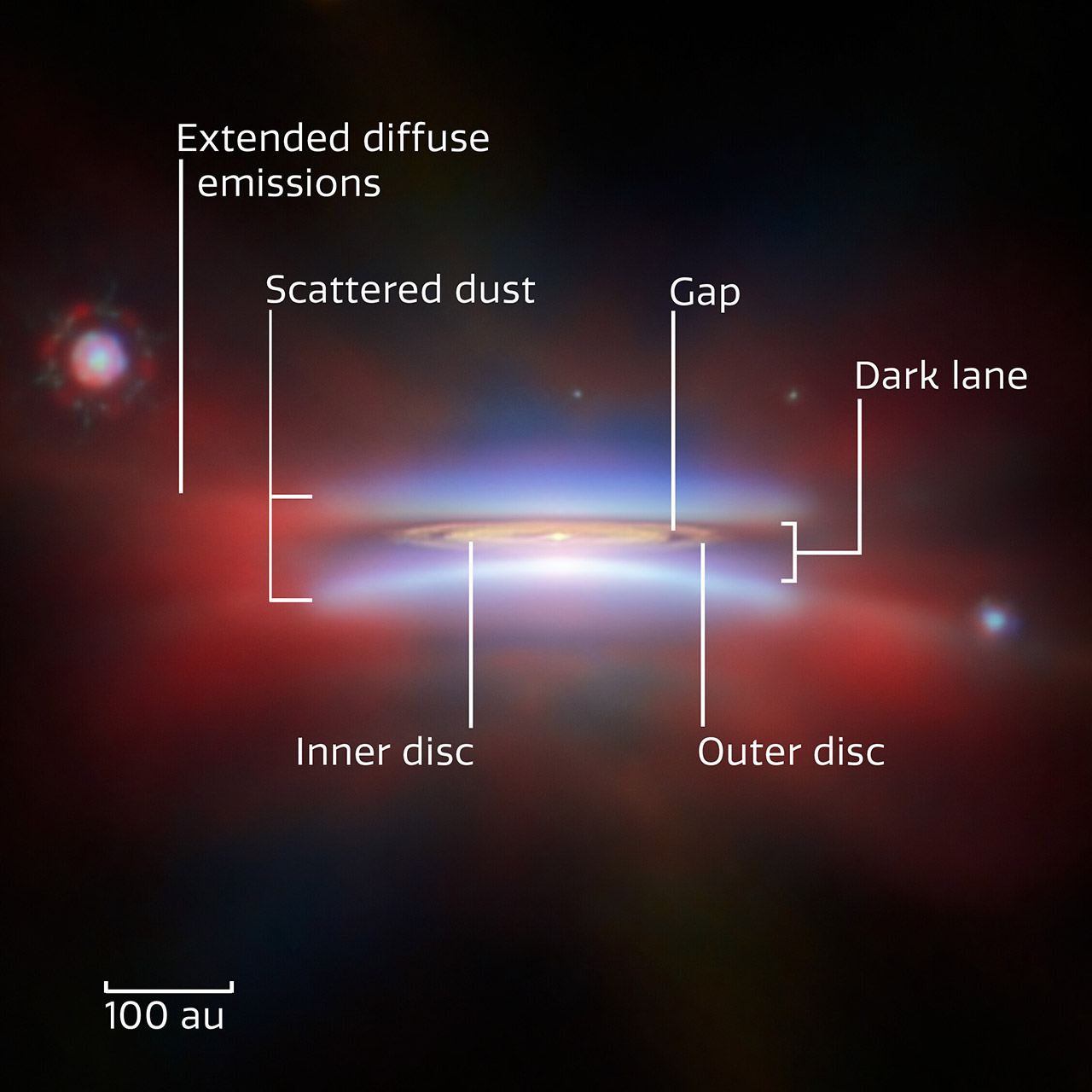
Next to that is the disk around Oph 163131, which is around 480 light years away and facing Ophiuchus. In that situation, the star is tucked snugly inside a yellowish disk, with dust patches dispersed all over the place above and below. We also have some other observations to help us get a better picture. The Hubble data shows how light bounces off the finest dust particles, while the ALMA radio telescopes help us figure out where the larger material is clustered, and you can see that bigger particles have a notable gap around the star. It appears that it is already clearing a route for something, possibly a young planet beginning to pull material together under its own gravity.
Sale

Celestron StarSense Explorer LT 114AZ App-Enabled Telescope – 114mm Newtonian Reflector with Smartphone…
- SMARTPHONE-POWERED SKY TOUR: No experience needed! Just dock your phone, launch the StarSense Explorer app, and follow the on-screen arrows to locate…
- PATENTED STARSENSE TECHNOLOGY: Unlike other astronomy apps, StarSense Explorer uses sky recognition technology to turn your phone into a celestial…
- TONIGHT’S BEST TARGETS, INSTANTLY: The app generates a curated list of the top objects to see based on your time and location. See planets, bright…
When massive clouds of gas and dust begin to collapse, young stars form. The remaining material forms a flat, spinning disk around the nascent star. Over the course of a few million years, fragments of that material begin to clump together, first as pebbles, then as larger things, eventually forming planets, comets, and asteroids. As time passes, the star’s radiation pushes most of the gas away, leaving behind a more settled environment. These two disks appear edge-on from our perspective, which is fortunate for us because it allows us to see the thin layers of dust that have been blown up out of the main disk plane and are emitting this bright glow. That’s because starlight reflects off of these particles, allowing us to see how dust is spread at various heights in the disk. The distribution of dust is critical because it influences the kind of planets that form where.
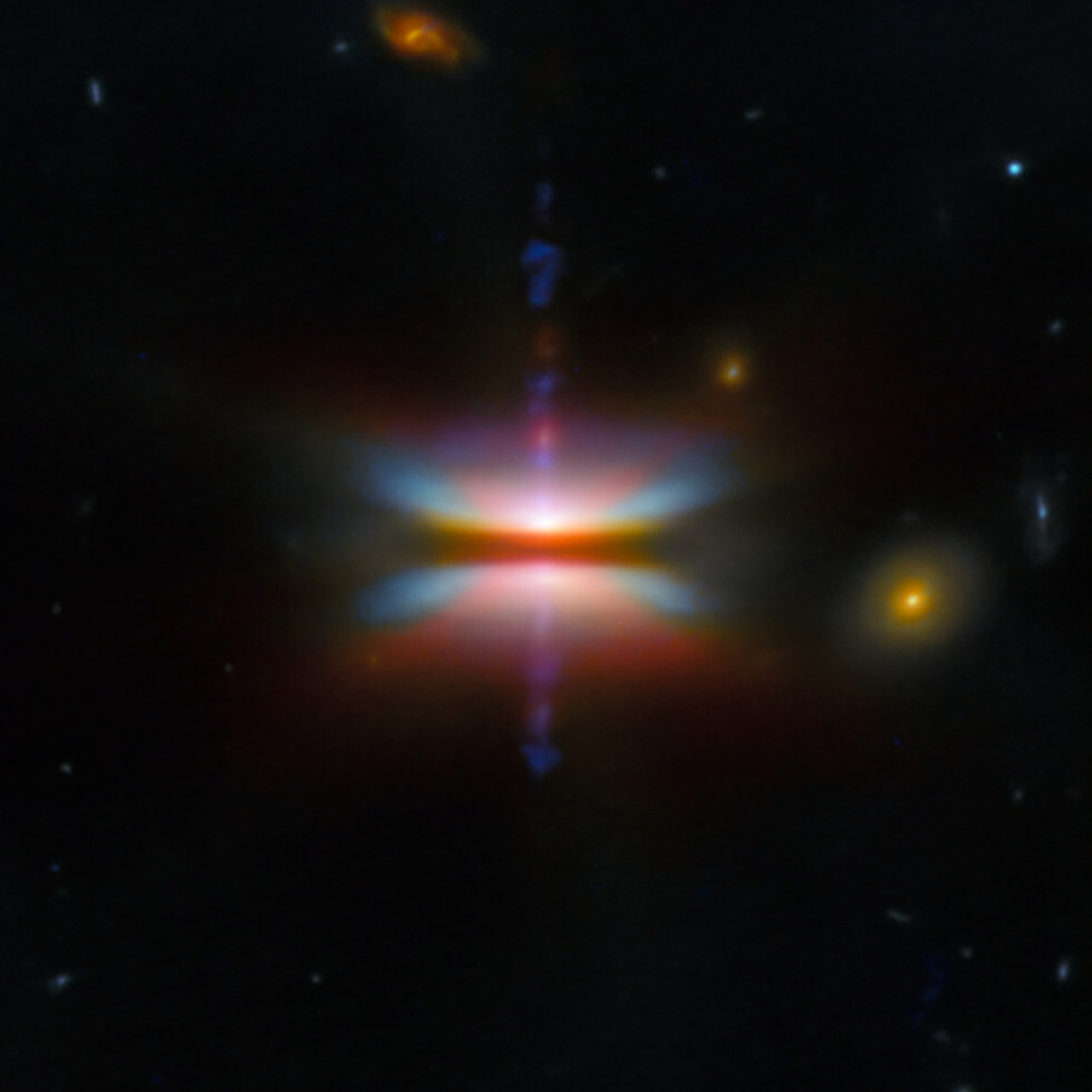
Now, the Webb instruments are the primary source of these observations. The near and mid infrared cameras detect heat signals from dust grains of various sizes and reveal the molecules present in the substance. By combining that with Hubble’s visible light and ALMA’s millimetre waves, we get a far clearer image, from extremely small particles to those nearly a millimeter across. Millimeter-sized grains are actually the most crucial for planet formation because they are in the early stages of developing into larger solids.
Webb Captures Twin Snapshots of Worlds in the Making
#Webb #Captures #Twin #Snapshots #Worlds #Making