Hubble and Webb Reveal Fresh Details from the Heart of the Pinwheel Galaxy
Astronomers have combined some incredible data from the Hubble and Webb telescopes to get a clear picture of the center of Messier 101, the Pinwheel Galaxy. They’ve managed to create a single, extremely sharp image of the galaxy’s core section, which explains why this place is known as the Pinwheel Galaxy. Right in the center, there’s a bright yellow bulge, which is completely surrounded by those meandering streams of dust and gas that are lit up in some very vibrant colors – hues of orange and brown, with scattered pink and blue patches throughout.
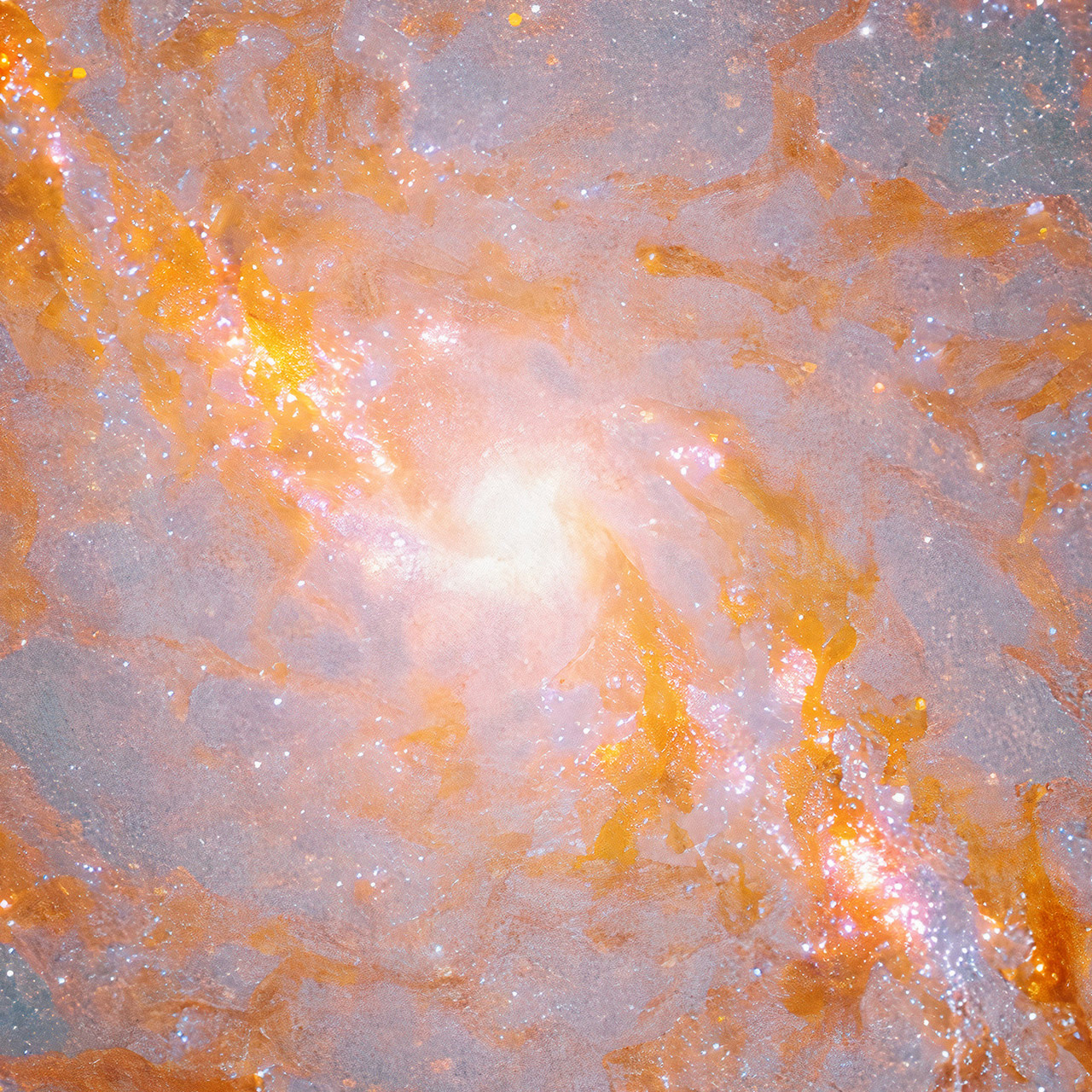
When you look at the central core in visible light, Hubble provides a very crisp image of the stars and ionized gas clouds. Young star clusters appear as bright blue clumps that are simply pumping energy into the surrounding hydrogen, causing it to glow in these stunning nebulae. The older stars crowded within the central bulge, on the other hand, emit a strong yellow glow, and the intricate dust lanes that wound their way outwards indicate the formation of spiral arms.

LEGO Technic NASA Artemis Space Launch System Rocket Building Toy for Boys & Girls – STEM Learning…
- BUILD AN OFFICIAL NASA ROCKET – Kids prepare to explore outer space with the LEGO Technic NASA Artemis Space Launch System Rocket (42221) building…
- 3-STAGE ROCKET SEPARATION – Young builders can turn the hand crank to watch the rocket separate in 3 distinct stages: solid rocket boosters, core…
- STEM BUILDING TOY FOR KIDS – This educational rocket kit was created in collaboration with NASA and ESA to showcase the authentic system that will…
Then you get Webb’s Infrared data, which allows you to cut straight through all that dust and see the cooler material that ordinary light cannot reach, and what you see when you look at these lanes are all sorts of fine structures filled with carbon molecules and tiny grains that emit this lovely warm glow. These dense pockets of dust are also where gas begins to compress and new stars form.
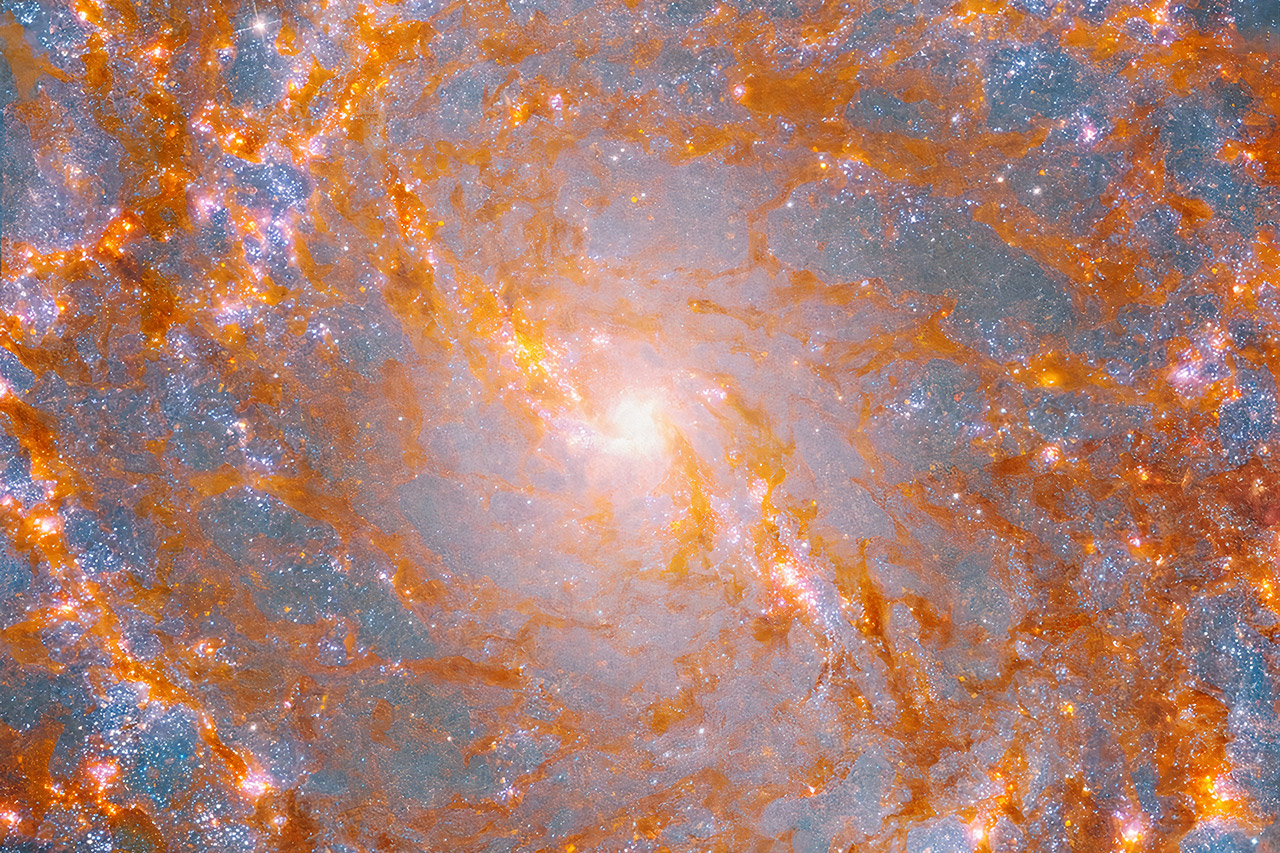
The views we have here capture each stage of the process as it occurs near the center. You start with dust clouds, then the gas collapses and a new batch of stars form, and finally the surrounding gas lights up in reaction. The bright blue portions of the image depict the fresh generation of stars, while the yellow center contains the older population that has been around for a very long time.
This galaxy is massive, stretching 170,000 light years from end to end, or about twice the breadth of the Milky Way, and contains at least a trillion stars. It’s located 25 million light years distant in the constellation Ursa Major and is one of the largest spirals visible from Earth. On a clear June night, you can see it with a normal telescope, but it takes a combination of views like these to observe the frenetic activity going on exactly at its center.
The astronomers that created this image used data from both telescopes and assigned colors to the wavelengths that each one detected. Hubble handled the visible and near infrared, allowing them to map the overall structure and various star populations. Then Webb did the longer infrared stuff, allowing them to get a better look at the small dust grains and molecules that develop in the gap between the stars.
Astronomers use these photos to study how galaxies maintain their structure over billions of years. By combining visible stars and hidden dust in the same image, researchers gain a much better understanding of where the material is gathering and how new stars are emerging, and each piece of data like this adds another piece to the ongoing story of a galaxy that has been spinning and creating stars for the majority of its cosmic history.
Hubble and Webb Reveal Fresh Details from the Heart of the Pinwheel Galaxy
#Hubble #Webb #Reveal #Fresh #Details #Heart #Pinwheel #Galaxy