The next generation of bionic hands is here—and they can feel
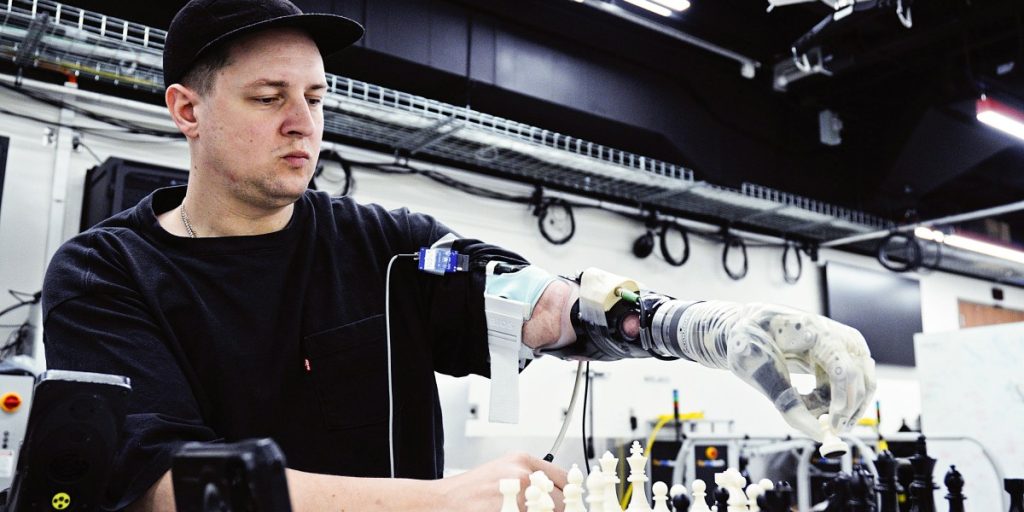
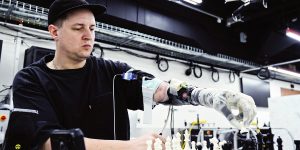
The hand is part of the bionic LUKE arm, named after Luke Skywalker of Star Wars, who was fitted with a lifelike prosthetic arm after his own was light-sabered off. The arm was developed in the 2000s, initially trialed in 2014, and approved by the FDA that same year. The trial that Davidson is enrolled in isn’t so focused on the arm itself but on a new way to connect it to a person’s nervous system. The connection allows users to control movements and receive feedback about how much pressure they’re applying.
Researchers hope that Davidson’s experiences will help them answer some long-standing questions about the technology, including how useful it really is in day-to-day life. They want to know when the device is helpful and where it might fail. They also want to learn how it might affect Davidson’s well-being as well as his brain and nervous system.
The loss of a limb
In 2009, when he was 16, Davidson climbed a telephone pole to get the best shot of a sunset. “I climbed about 35 feet up,” he recalls. But he lost his footing as he tried to descend. He grabbed for a wire, which ended up electrocuting him, before he fell to the ground.
The accident resulted in second- and third-degree burns over 37% of his body, says Davidson, “and I broke my back in approximately 50 separate locations.” He also broke eight ribs, and his spinal cord was severed. He’s pretty sure he broke his left wrist, too. But around 10 days later, his left hand—his dominant hand, and the one he’d grabbed the wire with—had started to develop gangrene. It was amputated.
Davidson was ultimately in a coma for around a month. “Once I woke up, they explained to me: You’re paralyzed, you’re never going to walk again, and also, we took your left hand,” he recalls. “A bit of an inconvenience at 16, to say the least.”
Davidson, now 33 and a trauma therapist, went on to have physical therapy and adjusted to life in his changed body. He’s tried a range of prosthetic hands. The first one, which he received a year and a half after his injury, was a basic hook that allowed him to pick things up. It wasn’t fancy, but it gave him “a psychological feeling of returning to being whole,” he says.
The hands he’s tried since have been more advanced—some have allowed him to control individual fingers with muscle movements, for example. Some have been covered by his medical insurance, which allows for replacements around every five years, he says. Others he’s had to buy himself. He bought his third prosthetic hand, for example, from eBay. “It’s funny to think I bought a secondhand second hand,” he says.
New connections
A chance encounter with a scientist at a supermarket introduced Davidson to the research team at the University of Utah, which specialized in researching devices that plug into the body. Since 2013, the team had been running a trial of a system that could connect with the nerves of a residual limb, allowing an amputee to control a bionic one. Davidson turned out to be an ideal candidate, says Jake George, director of the university’s neurorobotics lab.
#generation #bionic #hands #hereand #feel