Japan’s MMX Spacecraft Begins Its Journey to Fetch Rocks from Mars’ Moon Phobos
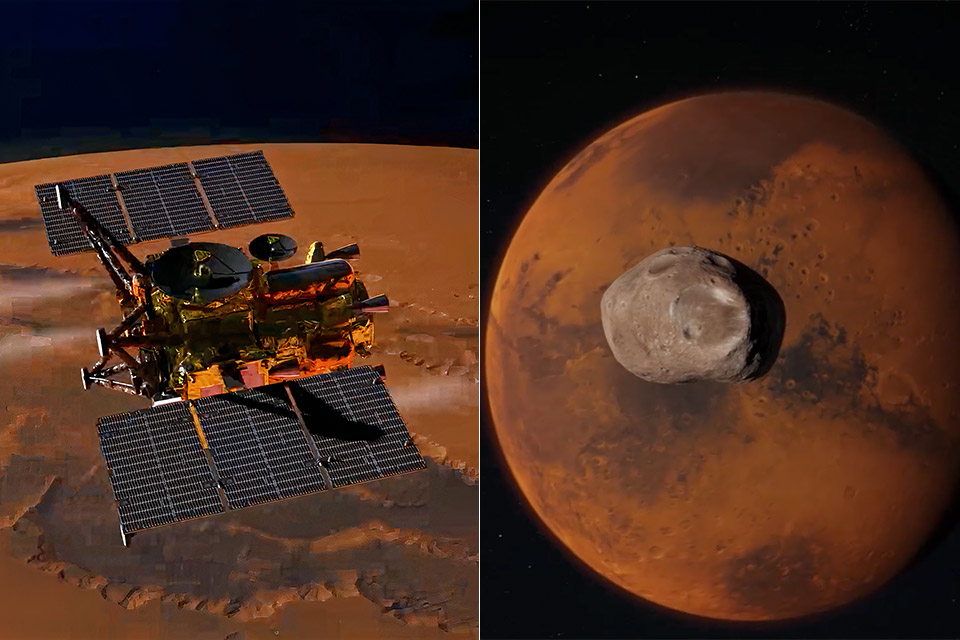
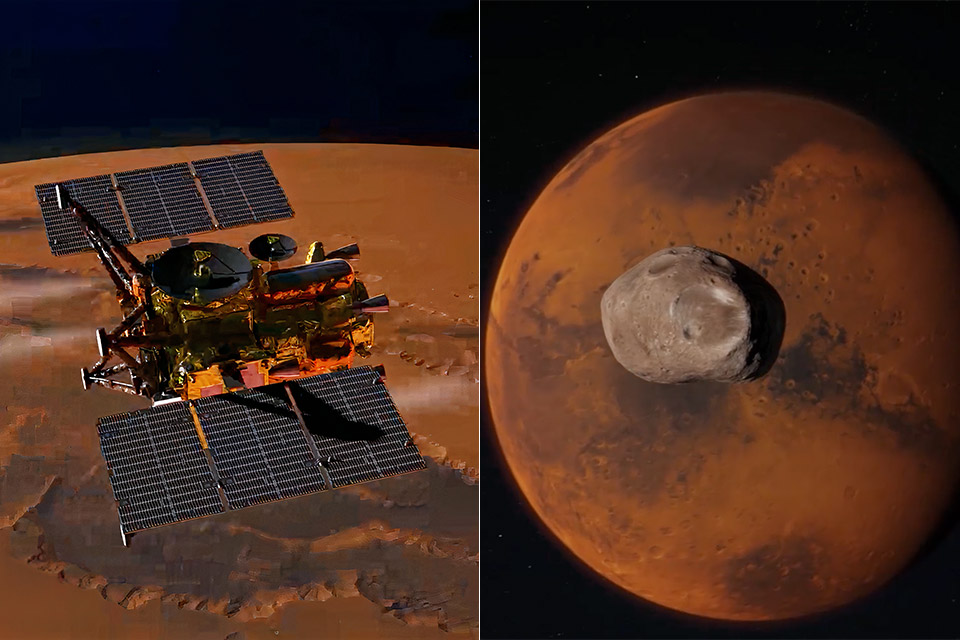
Japan’s Martian Moons eXploration spacecraft, known as MMX, lifted off from the Yoshinobu Launch Complex at Tanegashima Space Center in the early hours of Tuesday morning local time, riding Japan’s H3 rocket on its tenth flight. The vehicle, in its most powerful H3-24L configuration with four solid boosters, left the pad at 4:41 a.m. Japan Standard Time on October 20, which corresponds to 19:41 UTC on October 19.
Flight controllers saw the rocket’s stack follow a clear route as the boosters separated in pairs before the two-minute mark. The payload fairing came off shortly after, and the first stage completed its mission and drifted away. The second stage then did its thing, performing two burns, the second of which provided the final push to get MMX on its way to becoming a Trans Mars Injection, before releasing the roughly 4,480 kilogram spacecraft about 71 minutes after launch at a height of approximately 592 kilometers above central Africa and a speed of 11.2 km/s. MMX is now on its way to Mars and is expected to arrive in August 2027.

LEGO Technic NASA Mars Rover Perseverance Building Toys – STEM Model Kit for Boys & Girls, Ages 10+ Years…
- Feed a passion for science and technology – Kids can learn more about the challenges of space exploration with this LEGO Technic NASA Mars Rover…
- Conduct a test flight – This advanced building kit for kids ages 10 and up includes a buildable toy version of NASA’s Ingenuity helicopter, which…
- AR brings the mission to life – The accompanying augmented reality app experience lets kids dive into the details of the rover and its mission
Once in Mars orbit, the probe will enter a quasi-satellite orbit around Phobos, the larger of the two Martian moons, and will spend approximately three years mapping the surface, measuring local gravity, and examining the composition with a variety of instruments including a telescopic camera, an infrared spectrometer, a LiDAR, and NASA’s MEGANE gamma-ray and neutron spectrometer.
When in a good position around Phobos, it will deploy the 25-kilogram Idefix rover, which was manufactured by France’s CNES and Germany’s DLR and is named after the small dog in the Asterix cartoons. The rover on Phobos will weigh approximately 15 grams because the moon’s gravity is roughly one two-thousandth that of Earth’s, so it should be able to land on the dusty surface and then roll or bounce its way for about 100 days, surveying safe places and gathering data.
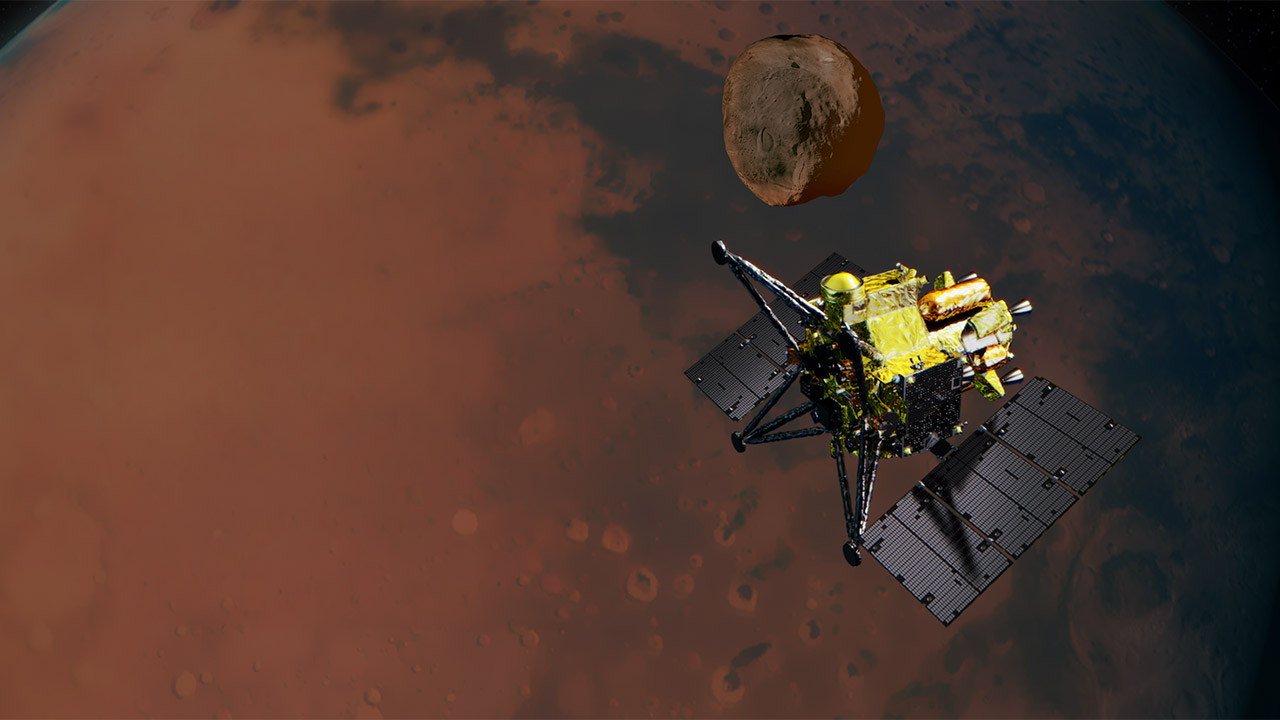
MMX is scheduled to make two separate touchdowns in 2030, one on the side of Phobos that faces Mars and one on the other side, utilizing a coring sampler to dig up some rock and a pneumatic sampler to blow out some surface material into a container. The goal is to collect at least 10 grams of Martian regolith, enough to conduct some genuine lab work back on Earth and determine if Phobos and its smaller moon Deimos were produced from debris thrown out by an ancient massive impact on Mars, or if they are captured asteroids.
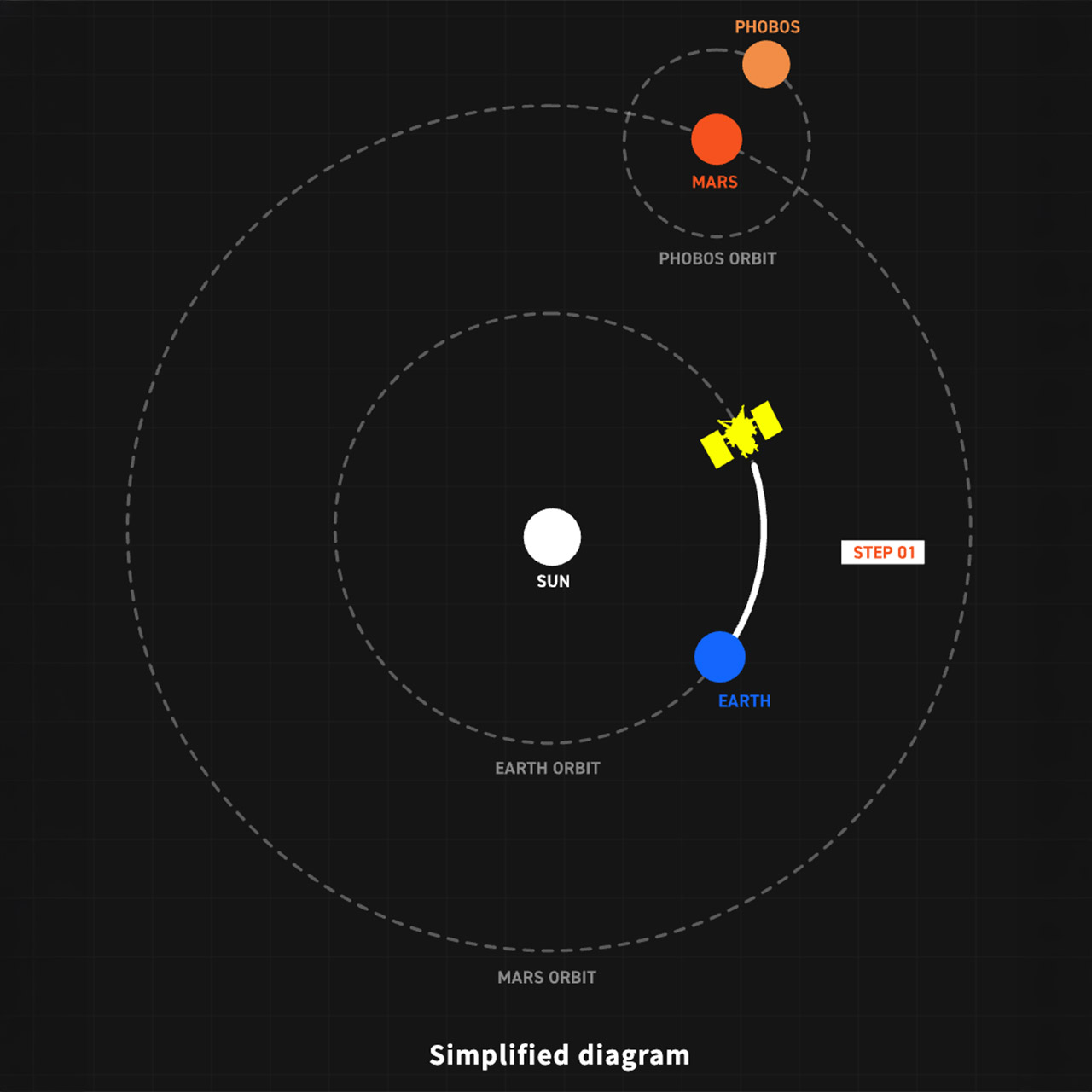
After sealing its samples in the return module, MMX will lift off and travel home, swinging past Deimos to have a good look and collect some data before safely landing in the Australian desert in 2031, completing the first sample return from the Mars system. The entire project is being led by JAXA, with assistance from NASA, ESA, CNES, and DLR, and it is building on many of the techniques developed with their previous Hayabusa asteroid missions, but it will be a bit of a step up because they will be operating so close to Mars and in Phobos’s weak gravity.
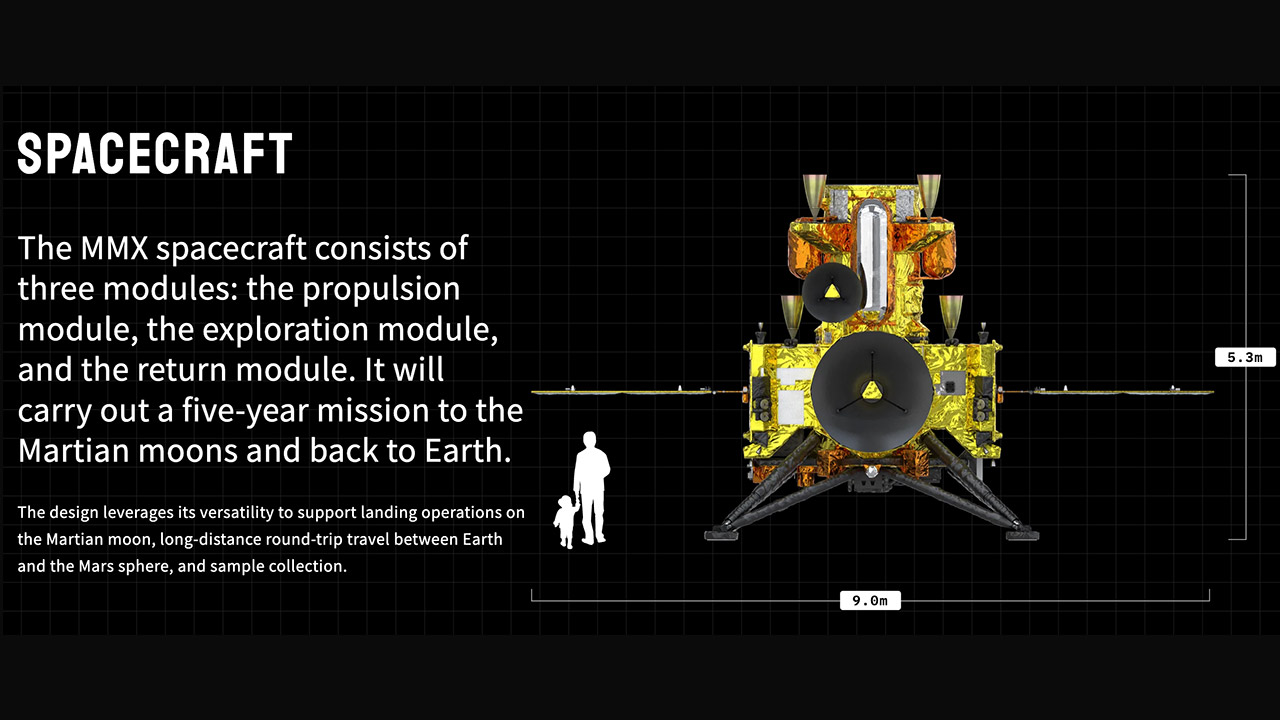
According to project manager Yasuhiro Kawakatsu, the moons are some of the most important unclimbed mountains in the solar system, and the samples will also include bits of Martian material mixed in the regolith, which could provide us with a second chance to study the planet’s early chemistry if their theories about how they got there are correct.
Japan’s MMX Spacecraft Begins Its Journey to Fetch Rocks from Mars’ Moon Phobos
#Japans #MMX #Spacecraft #Begins #Journey #Fetch #Rocks #Mars #Moon #Phobos