Inside the 500 Vape Battery Electric Car Experiment
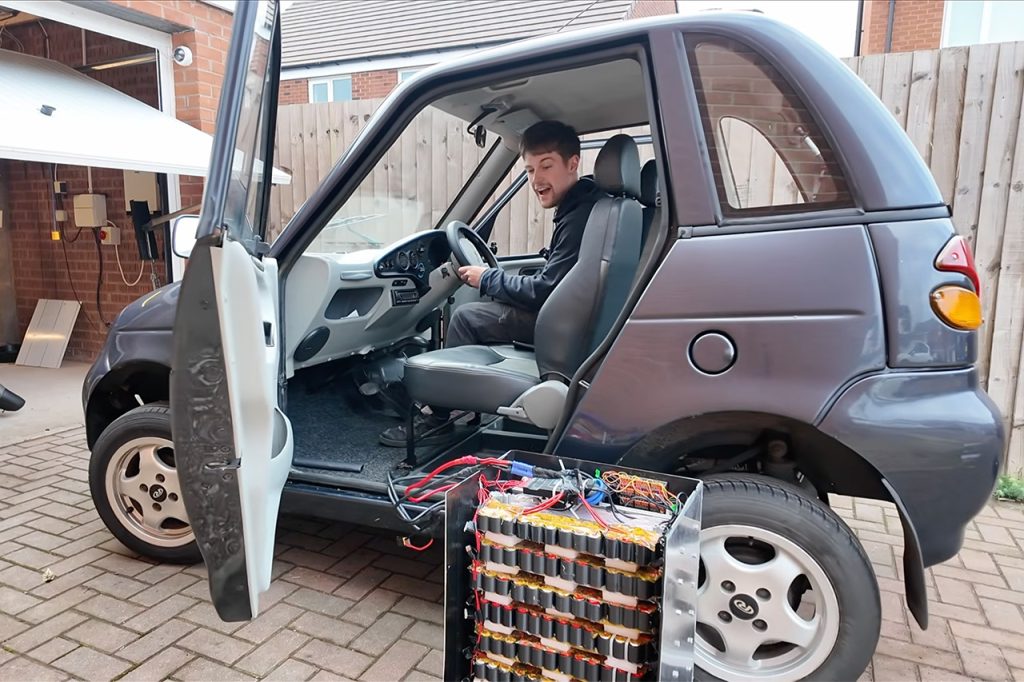
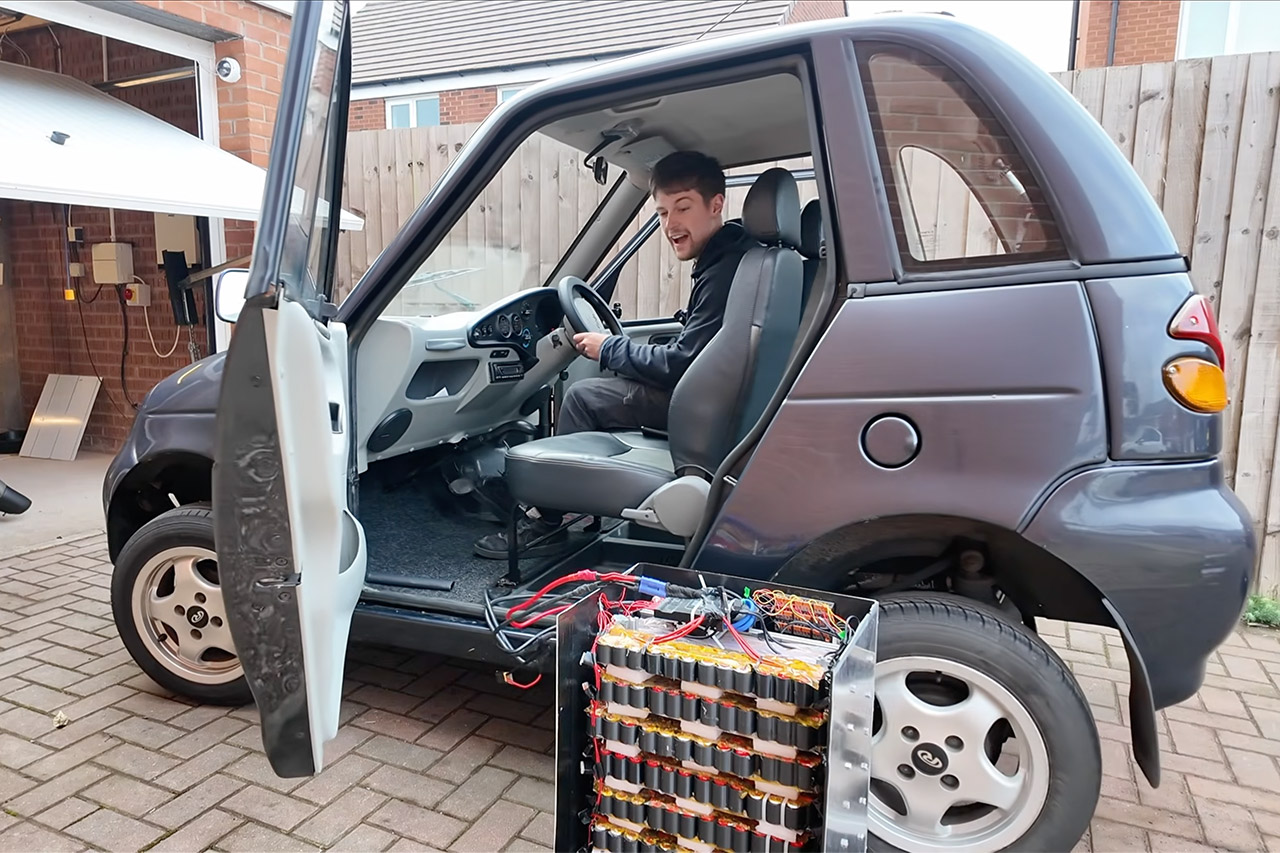
A UK maker has transformed a collection of discarded disposable vapes into a functional car. Chris Doel, the man behind a number of projects that recycle vape batteries, has recently installed his 500-cell lithium pack in a small electric vehicle and driven it on public roads.
He describes the end result as the world’s only vape-powered automobile. The base vehicle is a Reva G-Wiz, a compact four-seater from the early 2000s that is generally dubbed one of the most unimpressive electric automobiles ever built. It weighs a hefty 400kg without batteries and runs on a very primitive 48volt system, as it originally required heavy lead acid batteries to power its tiny 17 horsepower motor, which could only reach barely more than 50 mph on a good day.
Sale

Anker Laptop Power Bank, 25,000mAh Portable Charger with Triple 100W USB-C Ports, Built-in Retractable…
- Triple 100W USB-C Ports for Multi-Device Charging: Ideal for laptop users, this 25,000mAh power bank features three 100W USB-C ports for simultaneous…
- 25,000mAh for Long-Haul Power: Tackle week-long trips or extended camping with 25,000mAh capacity and ultra-fast recharging, reaching 30% in just…
- Dual Built-In Cables for Travel: Features two USB-C cables, one extendable up to 2.3 ft with 20,000 retractions, and another at 0.98 ft cable that…
Doel already had the battery pack figured out; he’d taken 500 discarded vapes, ensured that each and every cell was still functional, and assembled them all in 14 little modules connected in series to achieve roughly 50 volts. On paper, that yields approximately 2.5 kilowatt hours, but in fact it is closer to 2.1. The same battery had previously powered his workshop’s tools and lights.
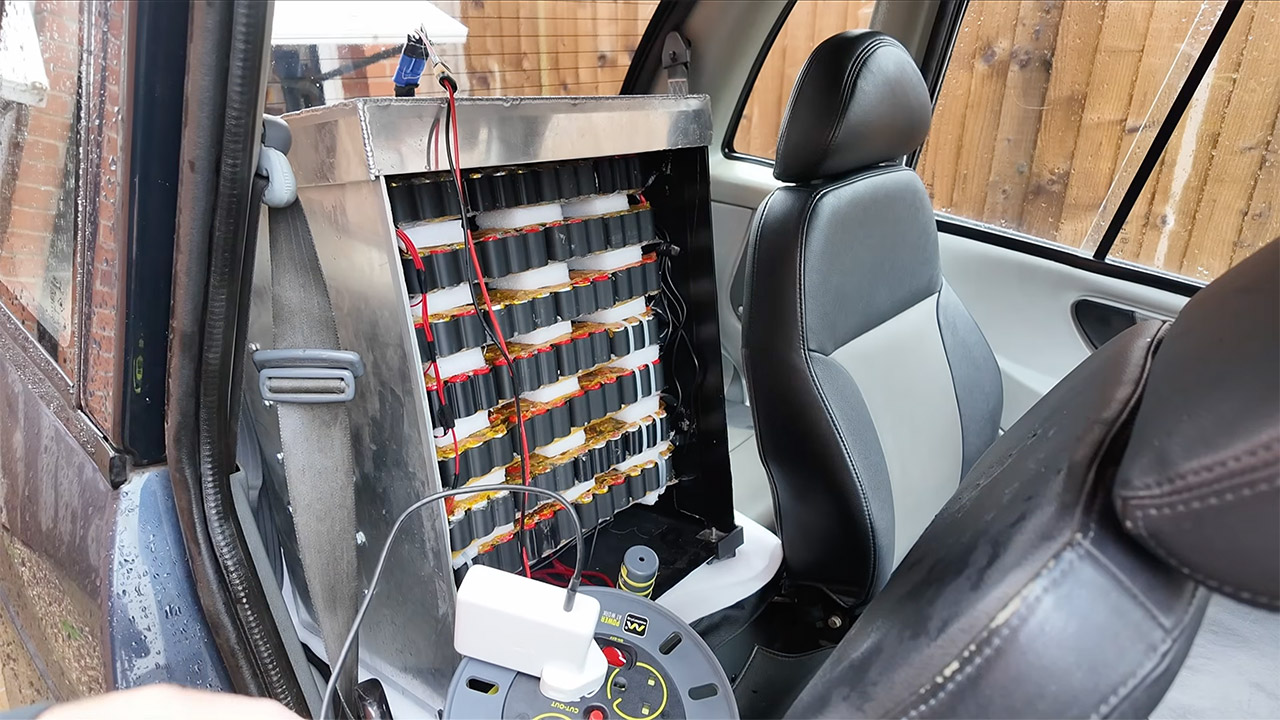
Mounting the lot was a little difficult because he had to fabricate an aluminum box to keep everything in place, add some extra insulation, and regulate the vibrations with thermal pads, foam padding, and silicone dampening. A clever battery management system keeps track of the voltages and currents for each individual cell, and individual fuses keep things from turning pear-shaped. There’s also a temperature probe that sounds a small bell when things get too heated. There is Kapton tape and other safety measures in place to ensure that it does not catch fire. The complete unit bolts nicely into the back seat area, replacing the old lead acids.
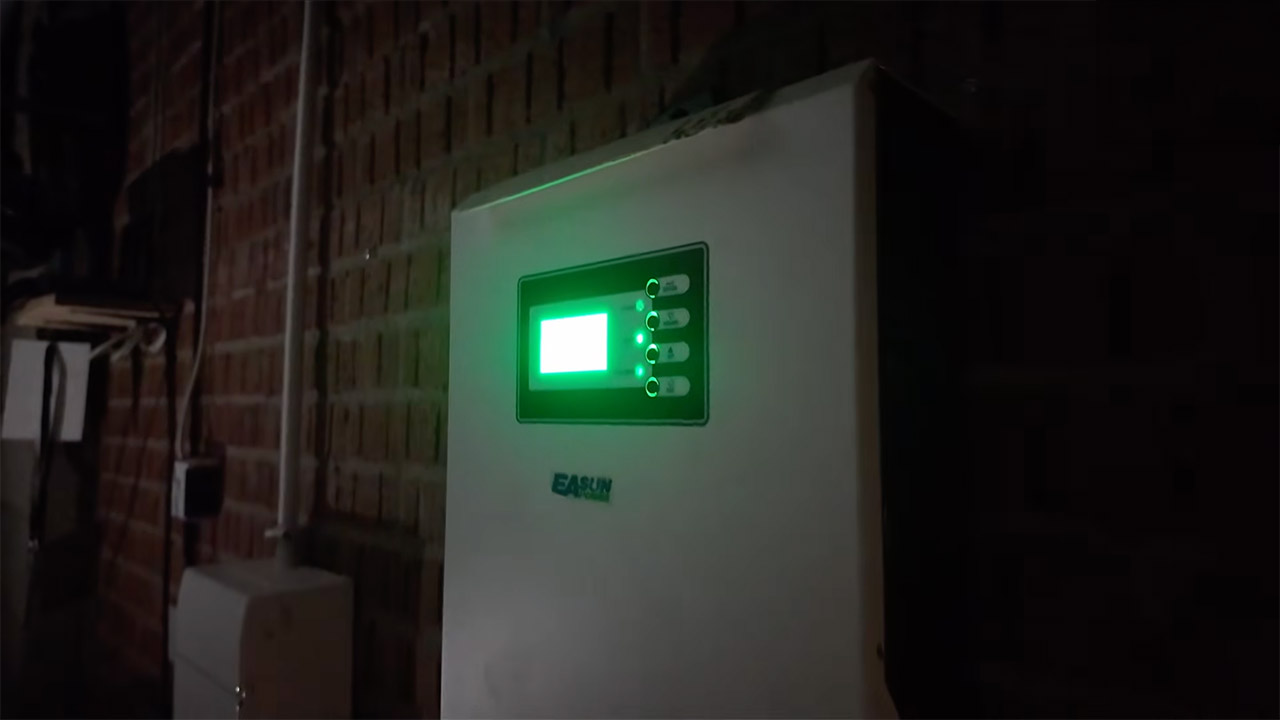
Electronics were simple enough, as the G-Wiz just utilizes a contactor to switch electricity to an inverter, which operates the motor with three phase AC. Doel simply added a circuit breaker, reprogrammed the inverter to limit the output slightly, and swapped in a DC-DC converter for the 12volt components such as headlights / wipers, and since charging must be done slowly, he simply used a USB-C adapter plugged into a small 138W laptop charger.

So, what happened on the road? Well, it moved. Initial tests indicated it could travel both forwards and backwards, and a proper drive revealed it was pulling approximately 160 amps at 15 mph, reducing to 90-100 amps at 30-35 mph on flat ground. Hills pushed 130-150 amps, but regenerative braking returned roughly 10 amps, keeping the pack nice and cool, peaking at 29°C. On a casual run that included some shopping and fast food, the range was 17-18 miles. Voltage sag from unequal cells eventually caused a cutoff, but no big crisis happened.
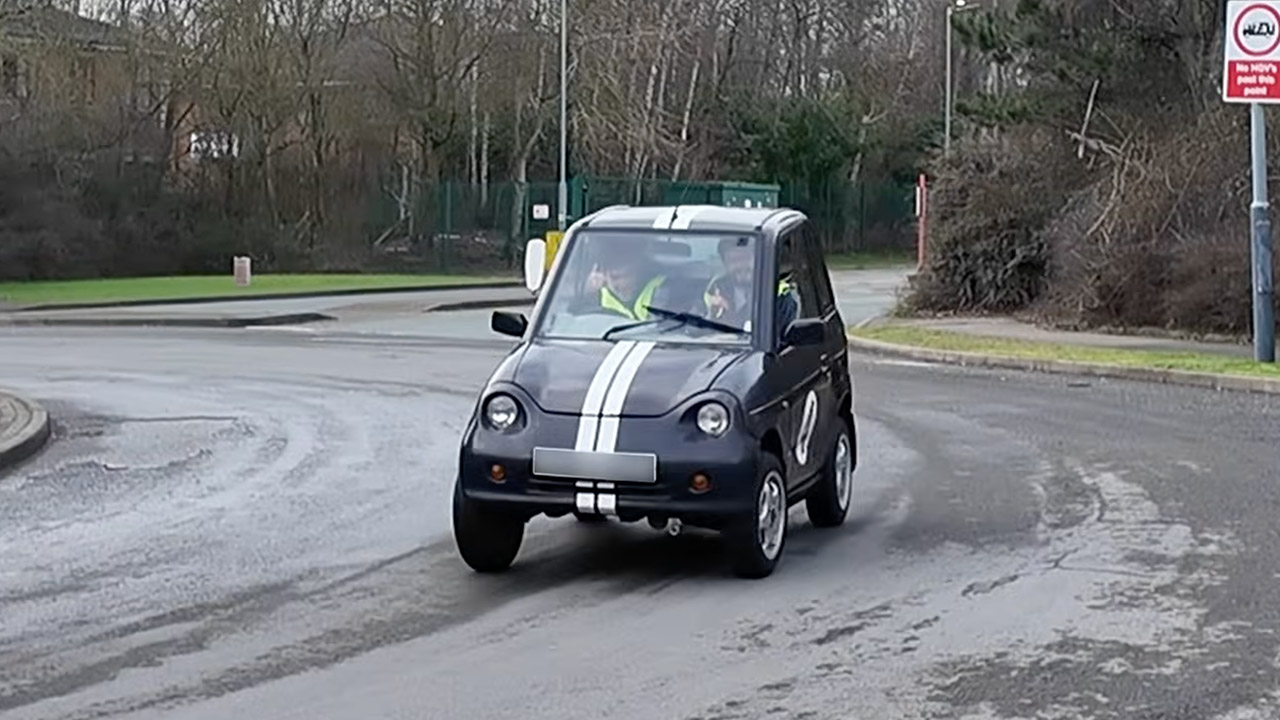
Doel purposefully capped the power so it wouldn’t be able to draw too much, as the car can actually handle a lot more current than it was drawing, but by limiting draw to about 120 amps, he was able to avoid blowing any fuses and giving the old recycled cells some breathing room.
[Source]
Inside the 500 Vape Battery Electric Car Experiment
#Vape #Battery #Electric #Car #Experiment