Gemini North Reveals Pa 30 as the Firework a Medieval Sky Once Held
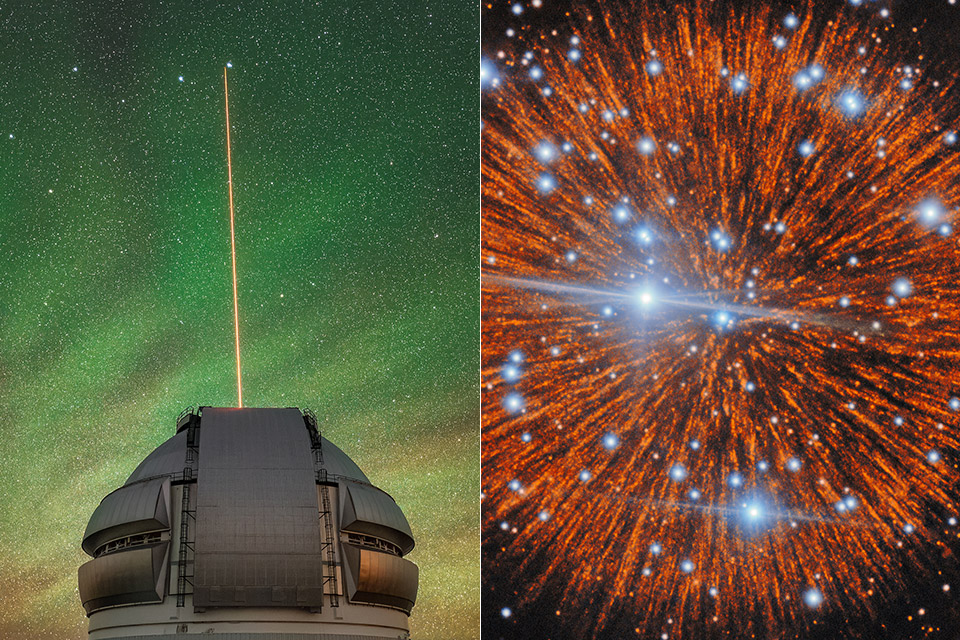
Photo credit: International Gemini Observatory/NOIRLab/NSF/AURA/M. Rodriguez
Eight separate records from Chinese, Japanese, and Arabic observers place a new star in Cassiopeia between August 4-6, 1181. It stayed visible for 185 days, long enough for court astronomers to log it during the Genpei War in Japan and the reign of Henry II in England. One of only five Milky Way supernovae people recorded before telescopes existed, that guest star faded and left no obvious wreck for modern catalogs to claim.
Dana Patchick discovered the missing wreck in 2013 while sorting through stacks of infrared photographs from NASA’s Wide-field Infrared Survey Explorer as part of a citizen science effort. What he discovered became known as Pa 30, which stands for Patchick 30, his 30th find. Using images from Kitt Peak, scientists discovered a faint sphere of radial filaments and a white hot center star, IRAS 00500+6713. All of the age and brightness values added up to match the 1181 event. Pa 30 is around 7,500 light-years away and remains the leading option for that medieval explosion.

LEGO Icons Hubble Space Telescope 11382
- EXPLORE THE HUBBLE SPACE TELESCOPE – Celebrate one of humanity’s greatest scientific feats while enjoying a relaxing building experience with the…
- REPLICA SPACE MODEL – Recreate the legendary space-based telescope with posable solar arrays and antennas, an opening aperture door and a detailed…
- AUTHENTIC DETAILS – Remove the exterior panels to reveal a detailed instrument bay, which features gyroscopes alongside primary and secondary…
Gemini North on Maunakea has just improved the view significantly. Using their Gemini Multi-Object Spectrograph, a team led by Timothy Cunningham of the University of Warwick and Ilaria Caiazzo of the Institute of Science and Technology Austria was able to reveal around ten times more filamentary structure than previous photos. The new results were published in The Astrophysical Journal just a few weeks ago, on October 6th, 2026, and in this frame, the firework shape they’d been talking about breaks down into chains of tiny knots, similar to a string of pearls on spokes radiating out from the center in a nearly perfect sphere.
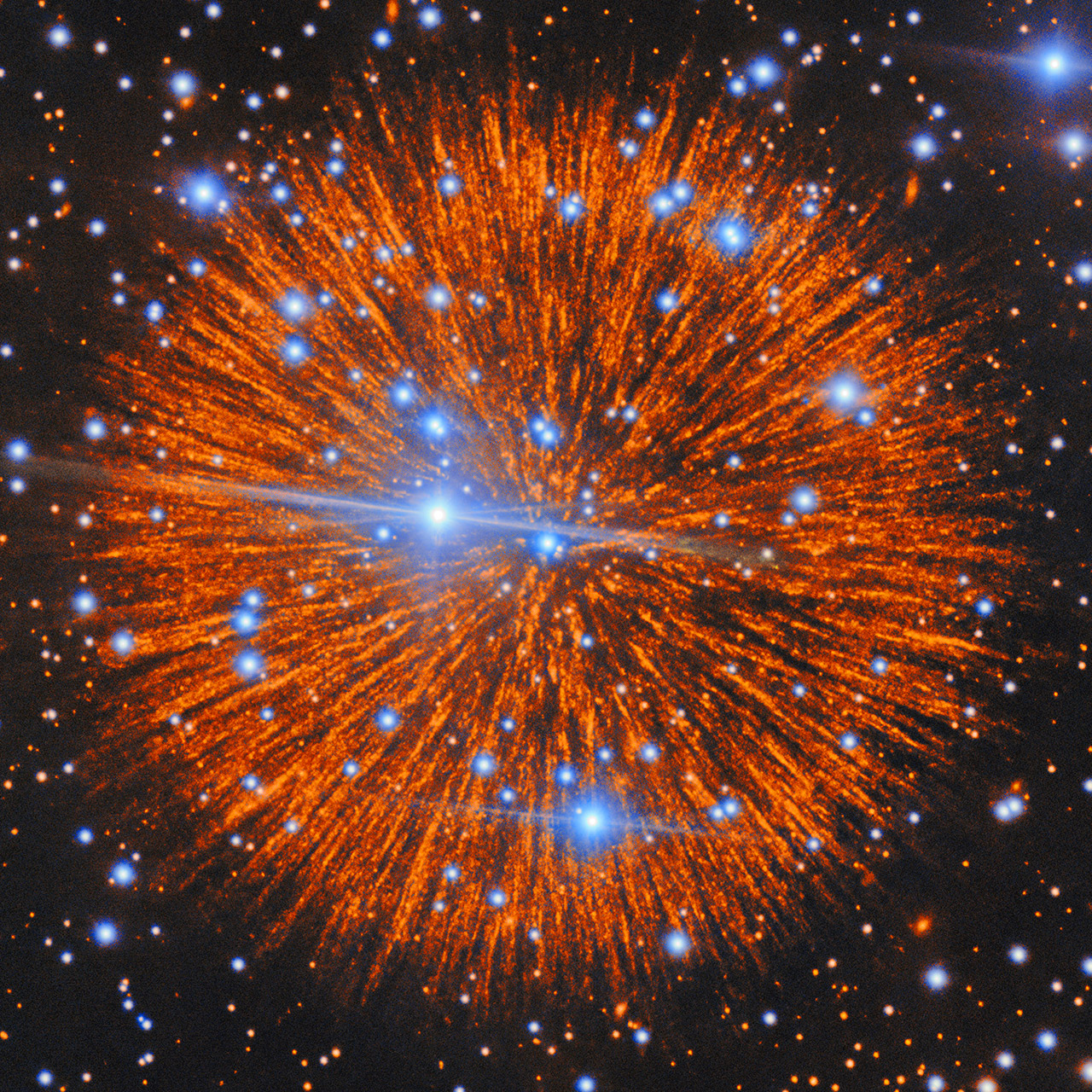
Those knots appear quite consistent because each one could hold the space around our solar system ten times over and still have room to spare. Cunningham, Caiazzo, John Raymond, and Scott Kenyon believe that temperature or density changes in the gas surrounding the star played a role in sculpting the debris as it flew outward. With an even shell, the ejecta would have remained smooth, but the uneven material rushing ahead of the blast appears to have broken up the debris into these small balls.
Pa 30 is the Milky Way’s only known Type Iax supernova remnant, making it an extremely unusual occurrence. A normal Type Ia explosion destroys the white dwarf. A Type Iax event is just weaker and incomplete, allowing the star in the middle to survive. Some astronomers refer to such remnant stars as zombie stars. This one is burning at 200,000 degrees Celsius and producing winds of roughly 16,000 kilometers per second. What’s interesting is that it’s almost exactly in the center. Most supernova remnants are pushed to one side; a centered survivor like this signals a burst with less energy than a total wipeout.
Chinese, Japanese, and Arabic notes from 1181, an amateur search through survey data in 2013, and a spectrograph on Maunakea in 2026, all of which refer to the same object. It’s remarkable, therefore, because Pa 30 still looks like a firework, one that never fully went out in the center.
[Source]
Gemini North Reveals Pa 30 as the Firework a Medieval Sky Once Held
#Gemini #North #Reveals #Firework #Medieval #Sky #Held