Innovative Daisy Robot Weaves Fresh Flowers Into Literal Chains One Stem at a Time
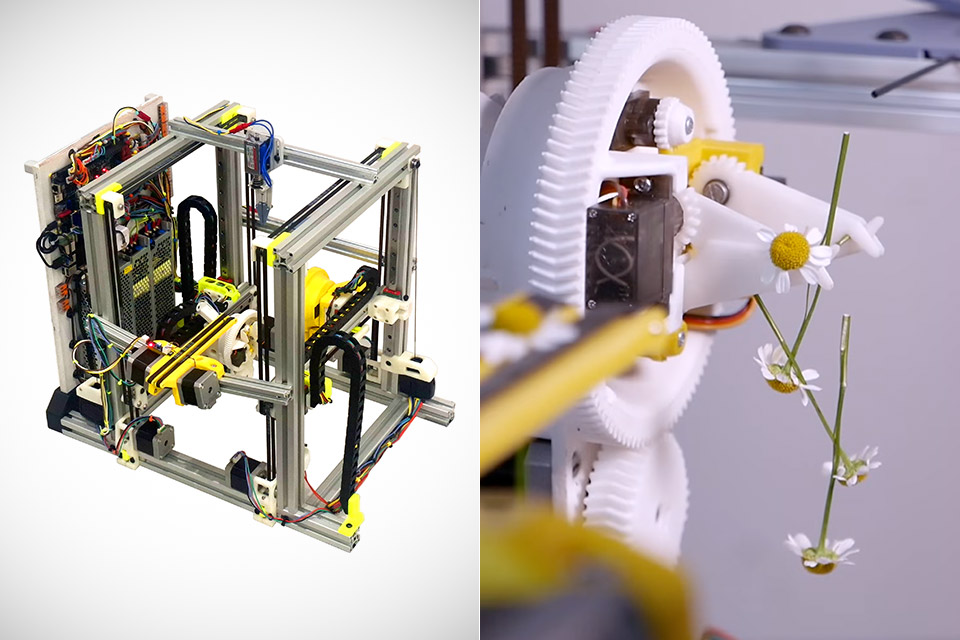
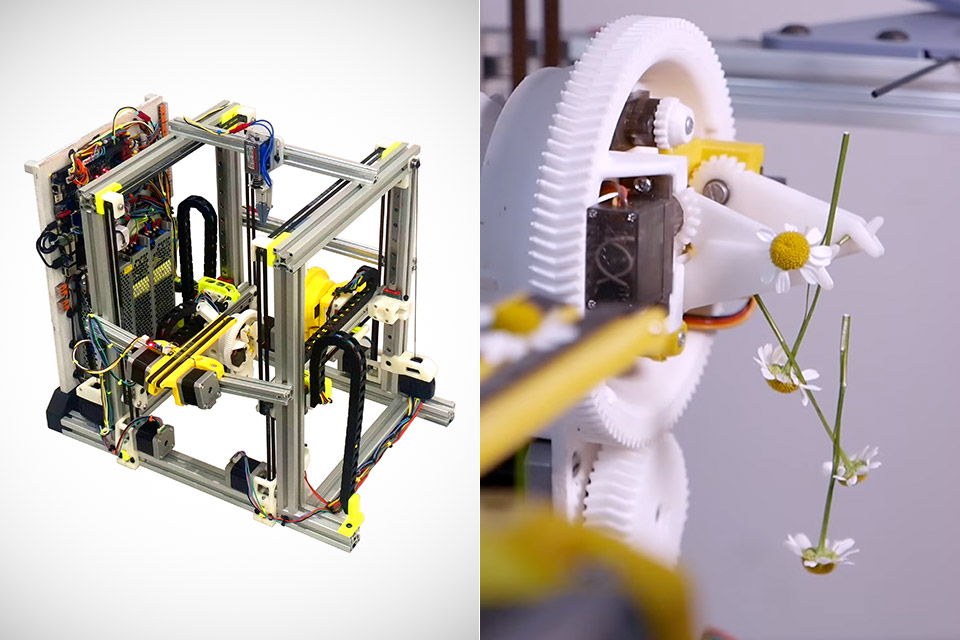
Jude Robinson built Daisy as his final year mechatronics project at the University of Glasgow, finished with first class honors, and took the IET prize for the best manufacturing project on campus. Two upright gantries face each other across a short workspace. Each carries a four joint gripper whose V shaped fingers close on a daisy stem and center it whether the stem is thick or thin.
A conveyor of mirrored timing belts brings the next flower right into reach. One gripper takes the new stem and inserts it through the slit already cut in the previous flower before lifting the couple up to a stationary scalpel. A spring-loaded sheath holds the stem steady while the blade makes a brief incision. A thin carbon fiber tube and wire snare are inserted through the fresh cut to create a hole for the next daisy. Every time the gantrys change roles, the chain grows one flower at a time.
Sale

Bambu Lab A1 mini 3D Printer + LED Lamp Kit, Ready-to-Use for Beginners
- A1 mini + LED Lamp Kit for Creative Light Projects: Bring your ideas to life with the included LED Lamp Kit. Simply print compatible lamp models and…
- The Perfect 3D Printer for Beginners: A1 mini 3D Printer is designed to make 3D printing easy from day one with automatic calibration, simple setup…
- Experience the Bambu Lab Ecosystem: Access MakerWorld’s huge library of ready-to-print models, manage prints through the Bambu Handy app, and enjoy…
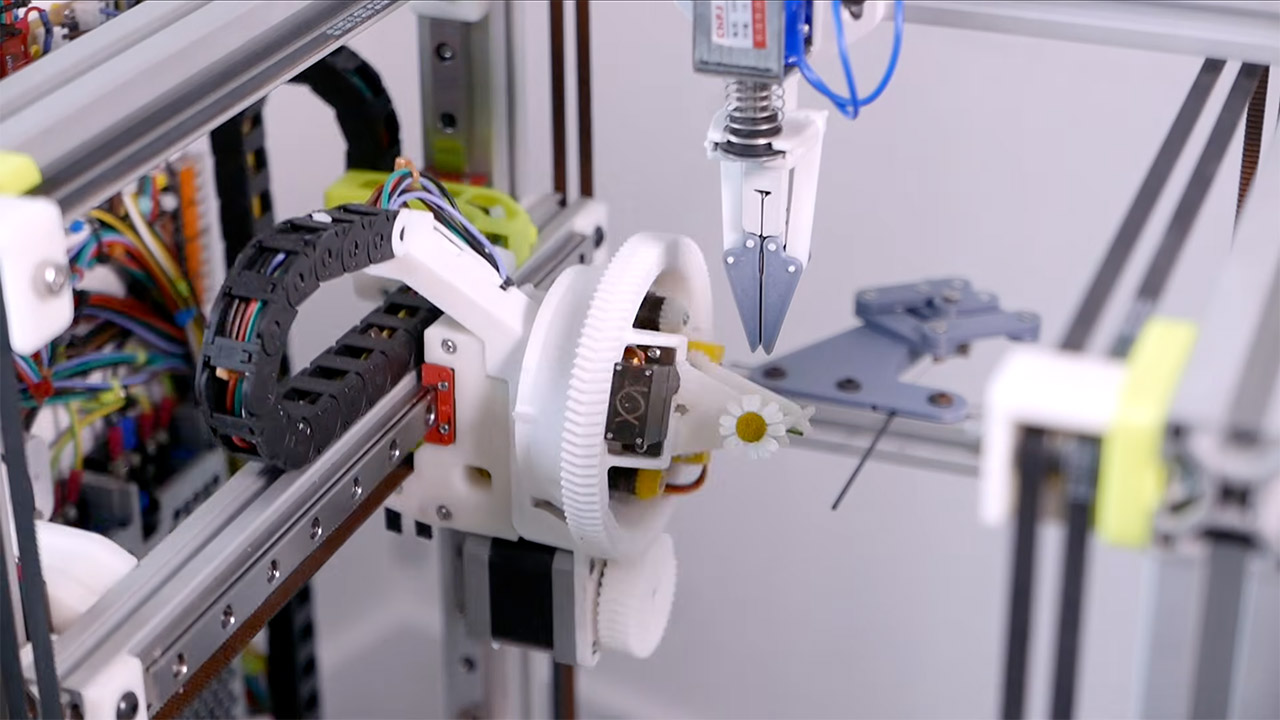
Robinson focused all of the sensing effort on the fixtures rather than relying on cameras. With the stem form and diameter having a significant impact on whether the cut and threading were successful, he concentrated on getting the V profiles in the fingers, the sheath surrounding the scalpel, and the threading post exactly right. Flowers with stems longer than 1.6 millimeters had a success rate of 64.3% once those parameters were optimized.
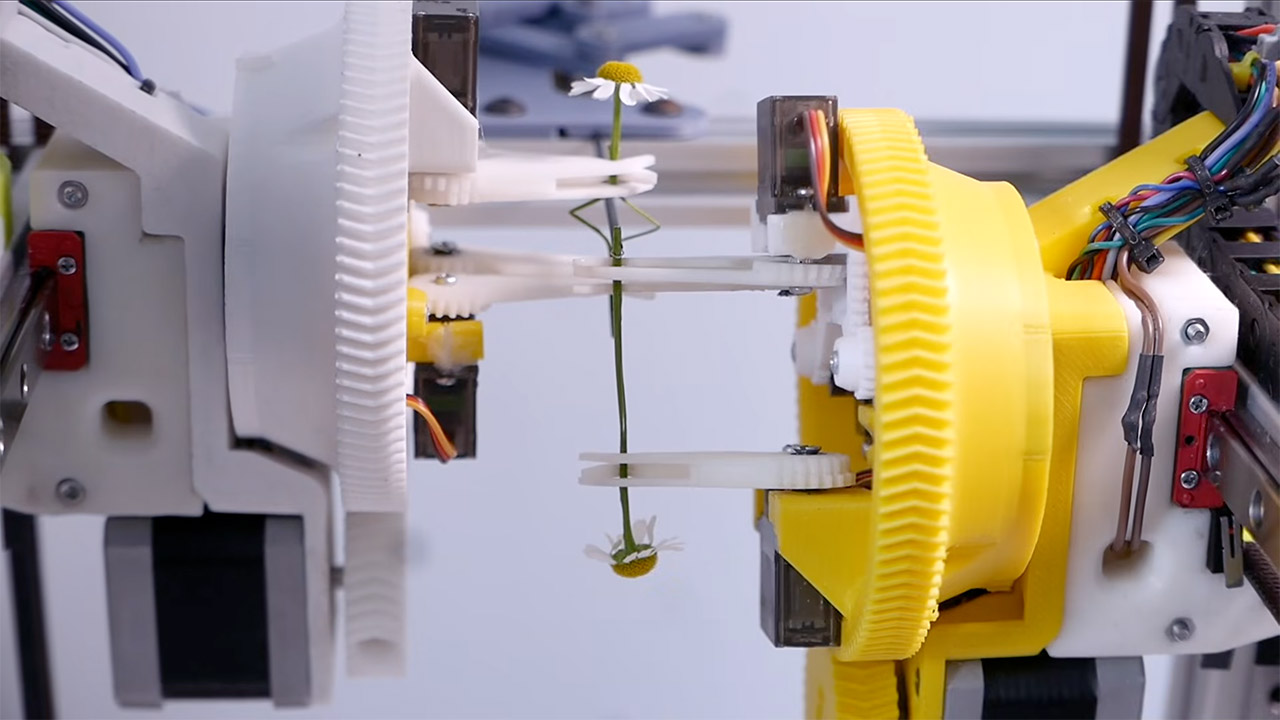
A Raspberry Pi 5 runs the inverse kinematics and communicates with a BIGTREETECH Octopus board, which operates all of the motors, including the NEMA 17 steppers on the gantries and conveyor, the MG90S servos in the grippers, and the solenoids on the blade and snare. The Klipper firmware controls every motion. Robinson even created a new Python class to ensure that the two independent core XZ gantries, based on the Voron Switchwire layout, may transfer control to one another. Another script converts simple English commands into Gcode, which the machine can execute. A little custom board with hex inverters maintains the servo signals nice and clear.
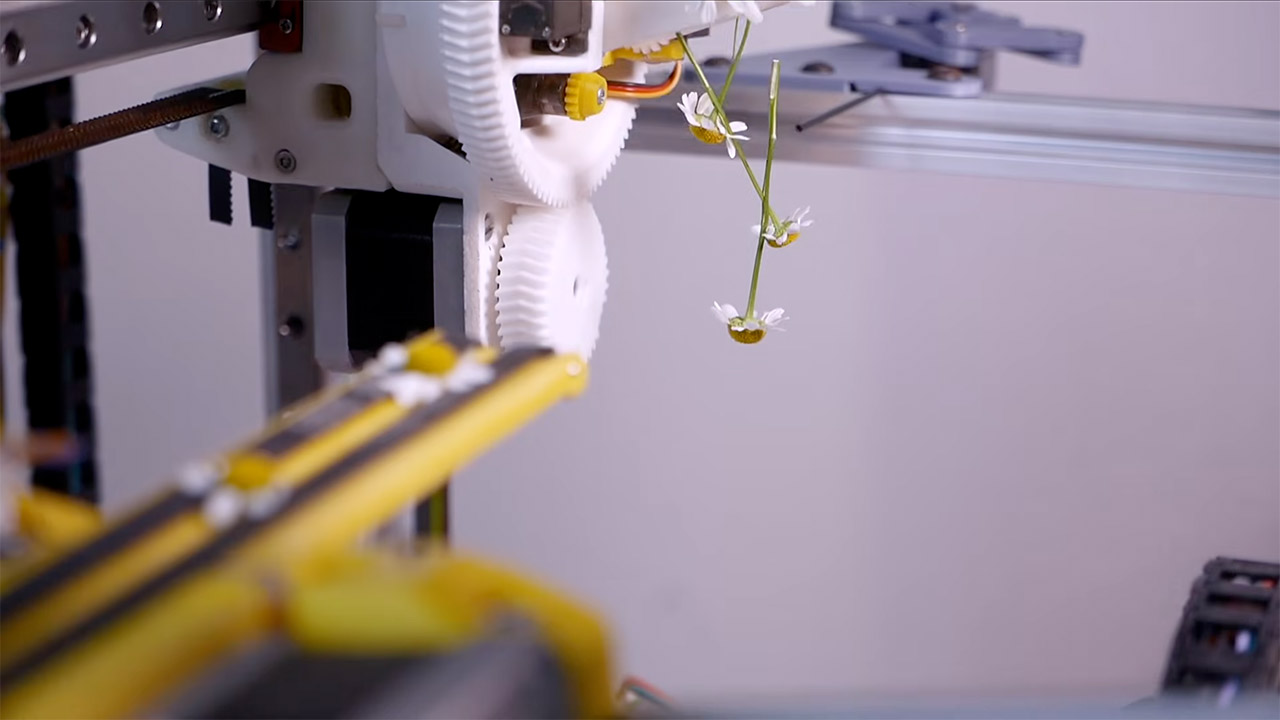
Watching the video of the machine in operation, the cycle appears to be nearly equivalent to regular flower handling. A flower enters, is grabbed, threaded, slit, and posted before the second arm takes over. When a failure occurs, it is usually due to a stem that is too skinny or bent, but the machine continues to run since every tool remains in one set position and every daisy is driven into the same spot. This strategy is really rather prevalent in simple machines such as nut sorters and sophisticated paper aircraft builders; simply deliver the part to the tool rather than chasing it with sensors.
[Source]
Innovative Daisy Robot Weaves Fresh Flowers Into Literal Chains One Stem at a Time
#Innovative #Daisy #Robot #Weaves #Fresh #Flowers #Literal #Chains #Stem #Time