Hubble and Euclid Team Up on the Cat’s Eye Nebula, the Cosmic Eye That Stares Back
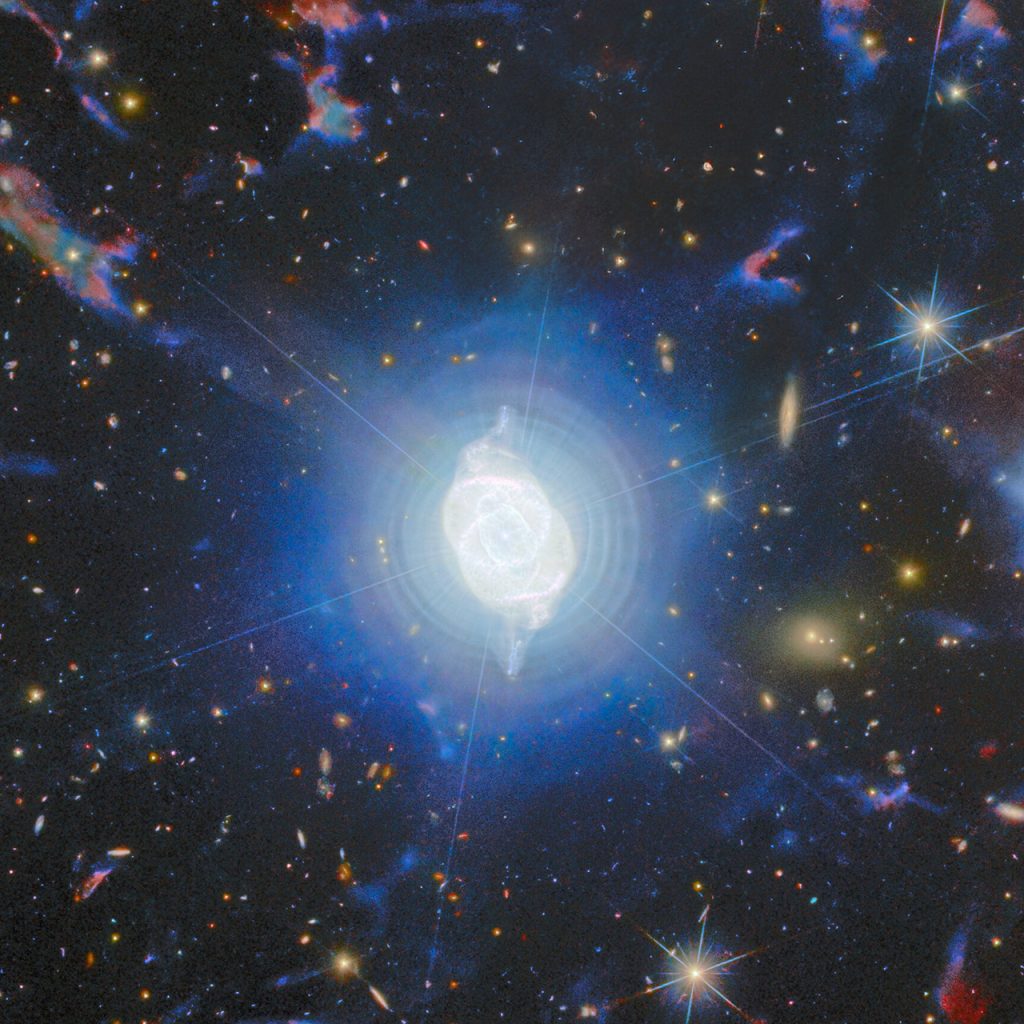
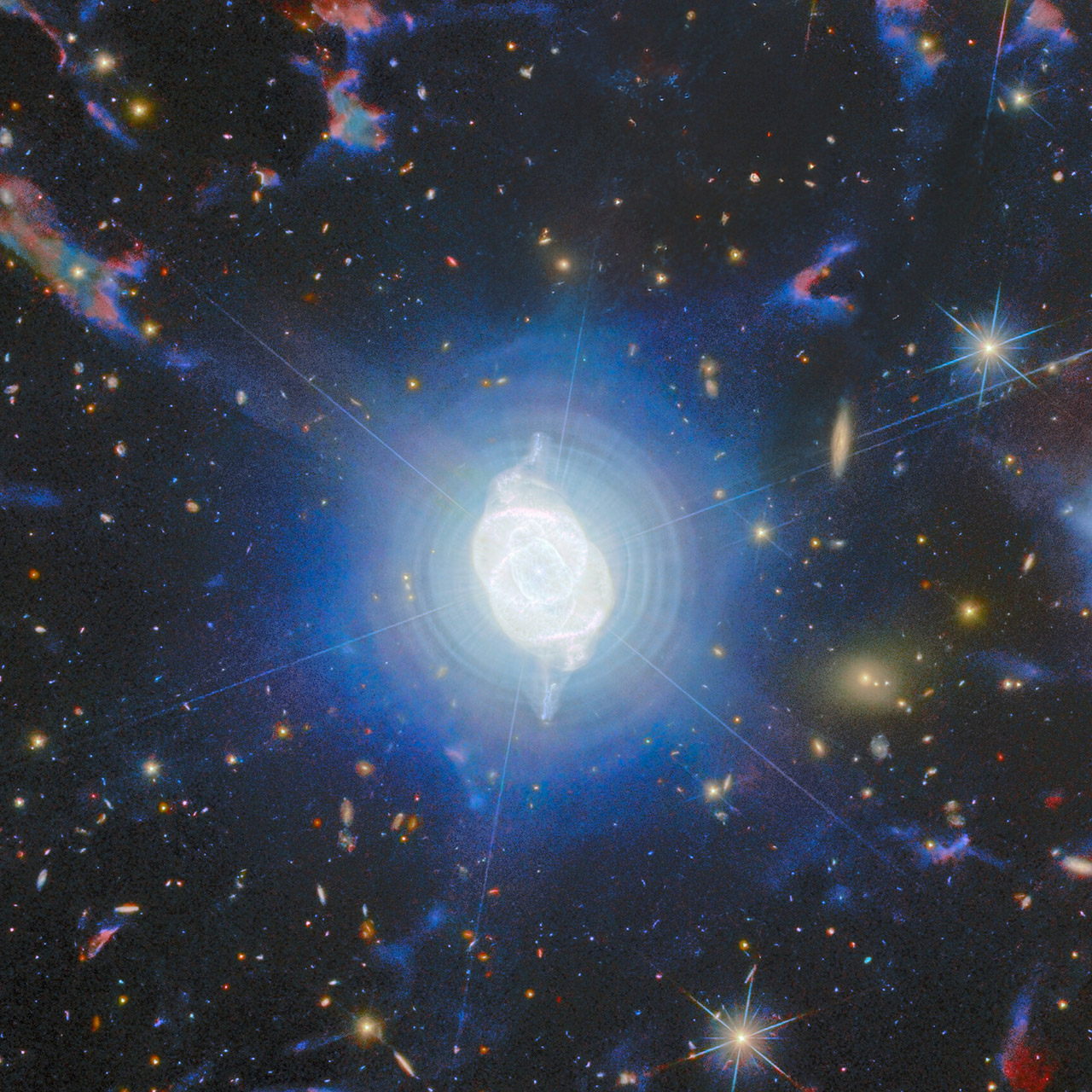
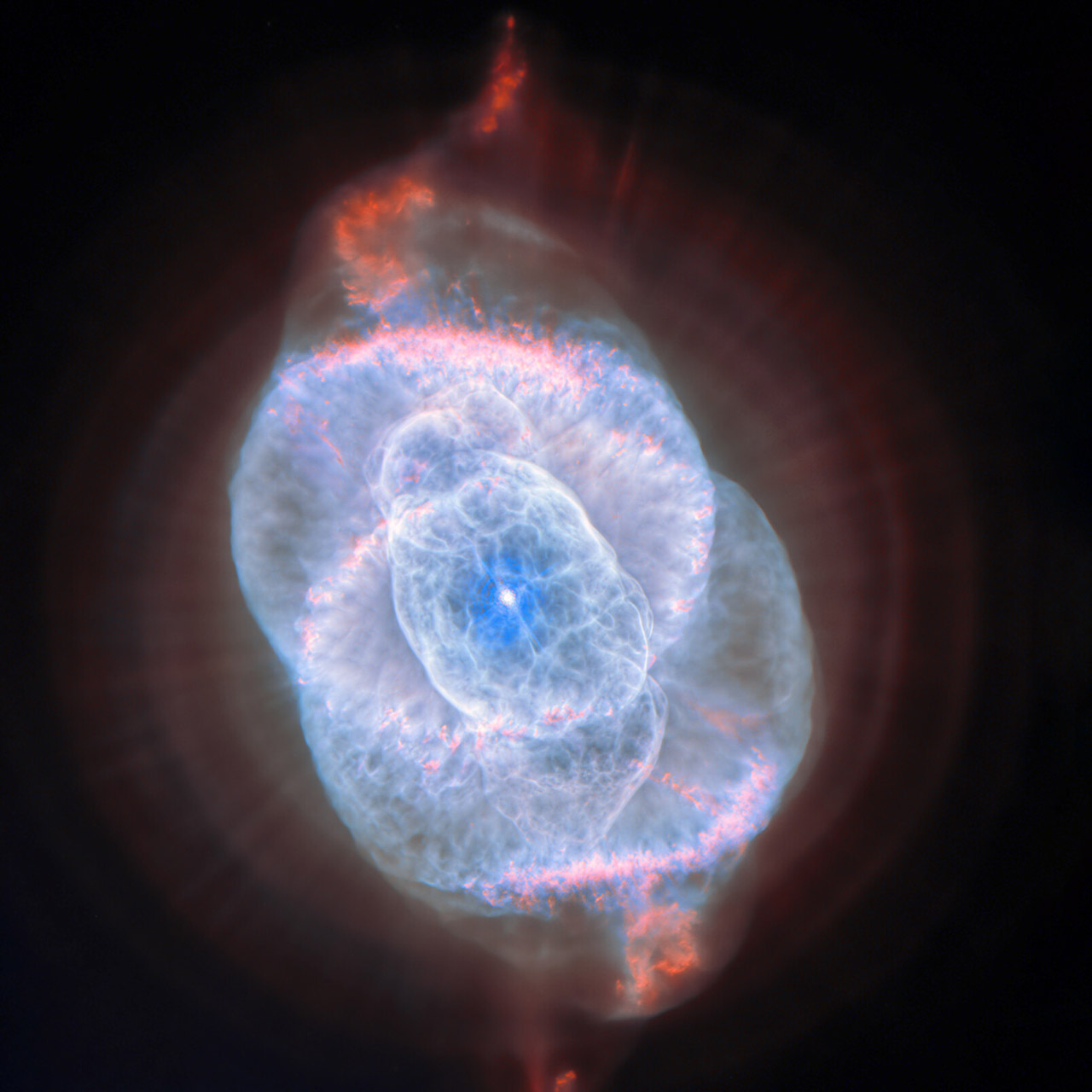
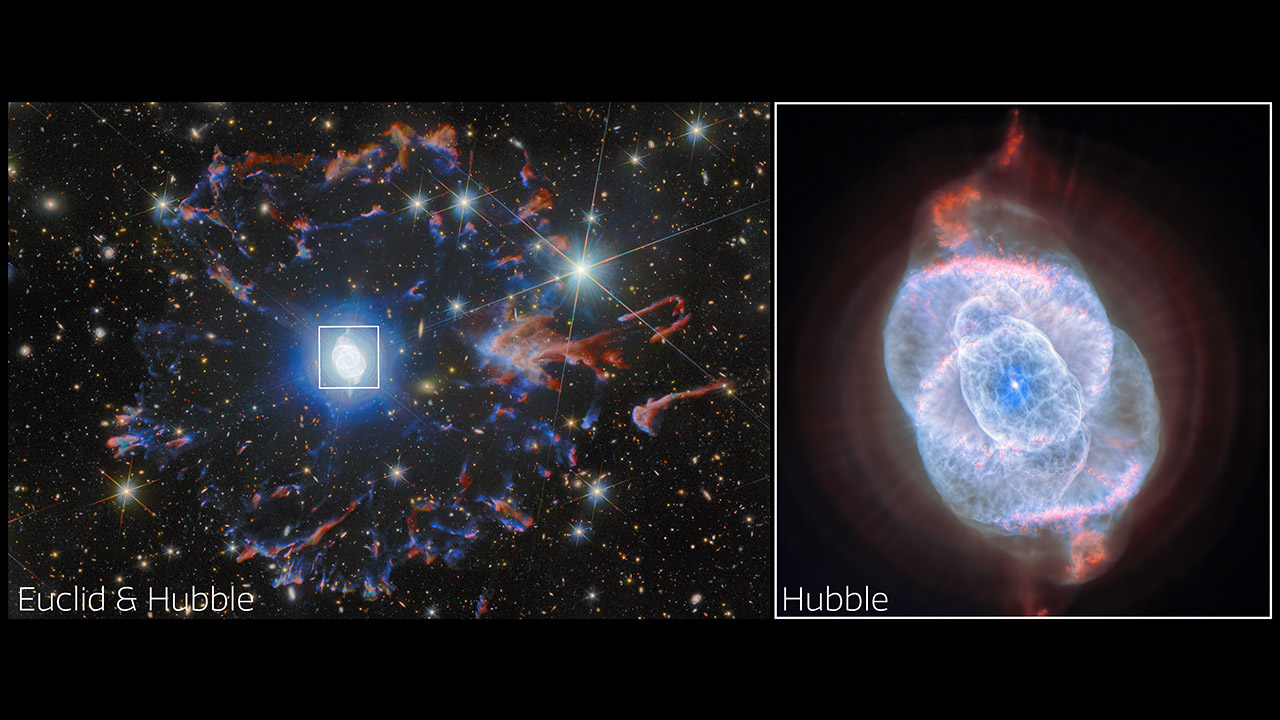
Astronomers have just released a stunning new image of the Cat’s Eye Nebula, combining two distinct views: one from NASA / ESA’s Hubble Space Telescope, which provides incredibly sharp details of the nebula, and another from the Euclid telescope, which paints broad brushstrokes of the larger cosmic scene. This planetary nebula, NGC 6543, is quite large, situated some 4,400 light years away in the constellation Draco and resembling a gazing eye with shimmering shells of gas that the dying star has emitted in a succession of last breaths as it nears the end of its existence.
Hubble has done the close-up job here, and it’s no surprise that the Advanced Camera for Surveys has captured visible light images of the nebula’s core. These photos reveal concentric shells of gas wrapping around the core star, similar to tree rings, each generated as a result of mass loss when the star blew its top. They also illustrate how high-speed jets are blasting out in all directions, as well as how the shockwaves from these eruptions collide to produce these tight tiny knots. You can almost see the history of the star’s final years etched in the intricate patterns, loops, billows, and other details, which are light-years more detailed than the simple round shape we observe from Earth.

LEGO Technic NASA Artemis Space Launch System Rocket Building Toy for Boys & Girls – STEM Learning…
- BUILD AN OFFICIAL NASA ROCKET – Kids prepare to explore outer space with the LEGO Technic NASA Artemis Space Launch System Rocket (42221) building…
- 3-STAGE ROCKET SEPARATION – Young builders can turn the hand crank to watch the rocket separate in 3 distinct stages: solid rocket boosters, core…
- STEM BUILDING TOY FOR KIDS – This educational rocket kit was created in collaboration with NASA and ESA to showcase the authentic system that will…
The Euclid telescope takes a broader view because its primary function was to map distant parts of the universe, but what’s really useful here is that it can gather near-infrared and visible light over large areas of sky, and when it looks at the Cat’s Eye, it shows us the nebula nestled in a halo of colorful gas fragments, with a large ring of material that’s basically the leftovers of all the other stuff that the star blew out before it got to this stage. If you look closely, you can see filaments and arcs stretching out into the outer sections, as well as all of the tiny galaxies stuck in the backdrop like tiny dots on a large canvas. The Euclid image puts the dying star’s work into perspective, demonstrating how much this one small event is truly a part of a much larger picture.
The Cat’s Eye is an astronomical landmark because it was the first planetary nebula to have its light spectrum analyzed in 1864, providing the first indication that planetary nebulae are not solid objects but rather composed of burning gases. It’s had a couple other close encounters since then, and Hubble has some incredible photographs from the 1990s that completely transformed the way we think about these kind of objects.
Hubble and Euclid Team Up on the Cat’s Eye Nebula, the Cosmic Eye That Stares Back
#Hubble #Euclid #Team #Cats #Eye #Nebula #Cosmic #Eye #Stares