Curiosity’s Sol 3924 Martian Jellyfish That Lasted One Frame
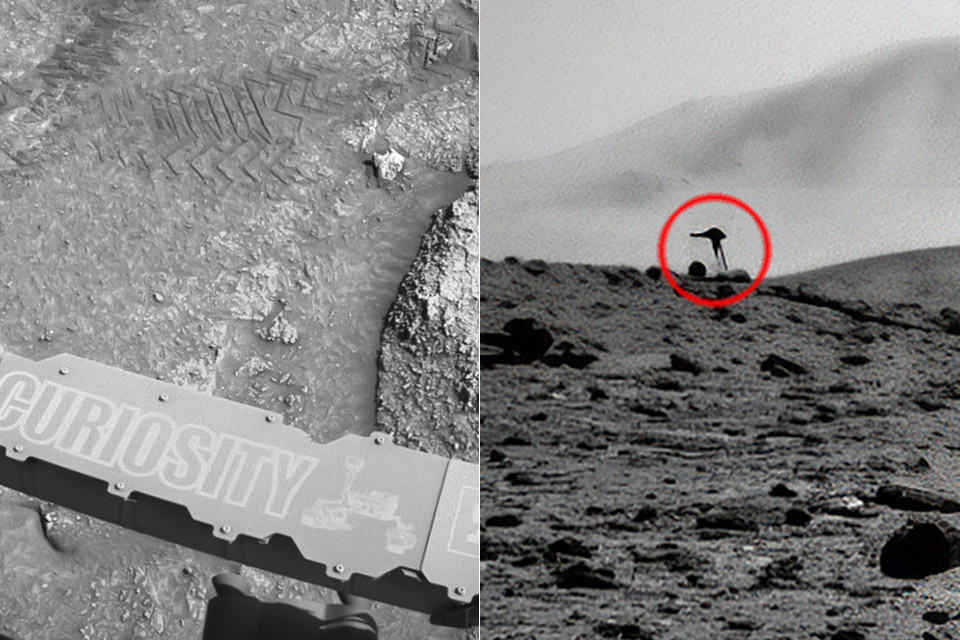
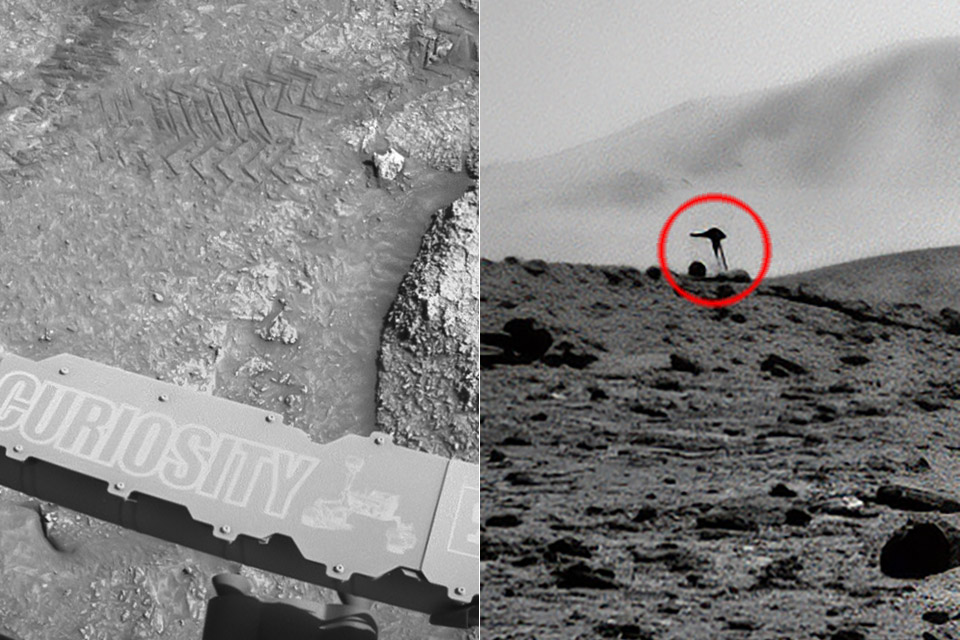
Curiosity’s right navigation camera swept across Gale Crater on August 20, 2023, at 22:27:46 UTC and recorded a small dark blot perched on a distant rocky ridge. In the raw grayscale frame from sol 3924 the blot sits far left, a compact dark mass with thin downward extensions that many later viewers read as tentacles. Zoomed and isolated, the form also reads as a miniature combat machine from H.G. Wells. The original NASA file is public and unaltered.
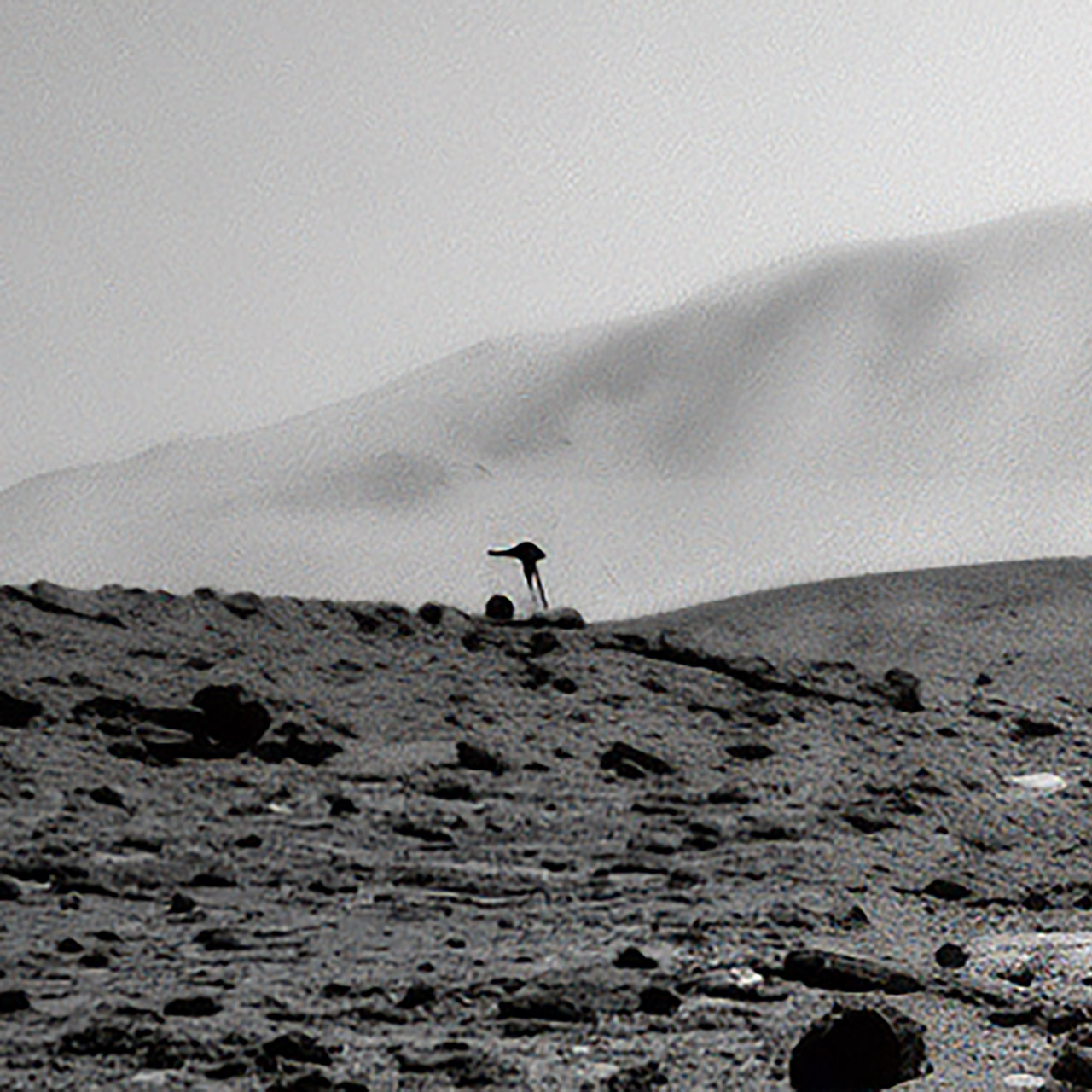
The identical camera captured the same length of ground 13 seconds earlier, as well as 25 seconds before that too. There was a solitary frame from that camera taken approximately 78 minutes later. None of these frames reveal a hint of the black shape. That’s odd, given that the mark only takes up about 15 tiny pixels in a low-resolution navigation image. You would need something moving or debris on that ridge to come and leave faster than any rover wind-blown rubble could, without leaving a blur trail behind it.

LEGO Technic NASA Mars Rover Perseverance Building Toys – STEM Model Kit for Boys & Girls, Ages 10+ Years…
- Feed a passion for science and technology – Kids can learn more about the challenges of space exploration with this LEGO Technic NASA Mars Rover…
- Conduct a test flight – This advanced building kit for kids ages 10 and up includes a buildable toy version of NASA’s Ingenuity helicopter, which…
- AR brings the mission to life – The accompanying augmented reality app experience lets kids dive into the details of the rover and its mission
Our brains are conditioned to fill in the blanks when we just have a few pixels to work with. A rounded dark center and a few vertical streaks reveal a jellyfish bobbing above the slope or a three-legged walker. Astrophysicist Joe Farah pointed out that if you crop the image very closely, you’ll notice a near-perfect line of black pixels with no blurring at the margins, similar to the clean edge that results from a built-up charge rather than a reflection off a genuine surface.

High-energy particles zip in from space all the time and collide with the cameras of Mars rovers. With no magnetic field on the planet and an atmosphere that only provides a fraction of the protection that Earth does, they pass through to the surface with little interference. If one strikes the silicon detector, especially during a calibration frame when the sensor is more ‘open’, a localized charge is created. The processing pipeline then subtracts the bias measurement from the original shot. That dazzling strike turns into a dark area that is left behind. During readout, the charge spreads a short distance along the detector columns, stretching the dark core into thin descending lines that resemble dangling legs in midair.
That frame had been in the National Aeronautics and Space Administration’s (NASA) raw-image storage for quite some time when Kari Sivertzen put it on X in August 2026. The likeness to a jellyfish or a tripod quickly spread. The simplest approach to determine whether this image is just a piece of space radiation in our thoughts is to compare the frames immediately before and after, and if the shape is present, you know it is what it is.
[Source]
Curiosity’s Sol 3924 Martian Jellyfish That Lasted One Frame
#Curiositys #Sol #Martian #Jellyfish #Lasted #Frame