Six Seconds of Controlled Blast, NASA Starts Firing Into Fake Moon Dirt for Artemis IV
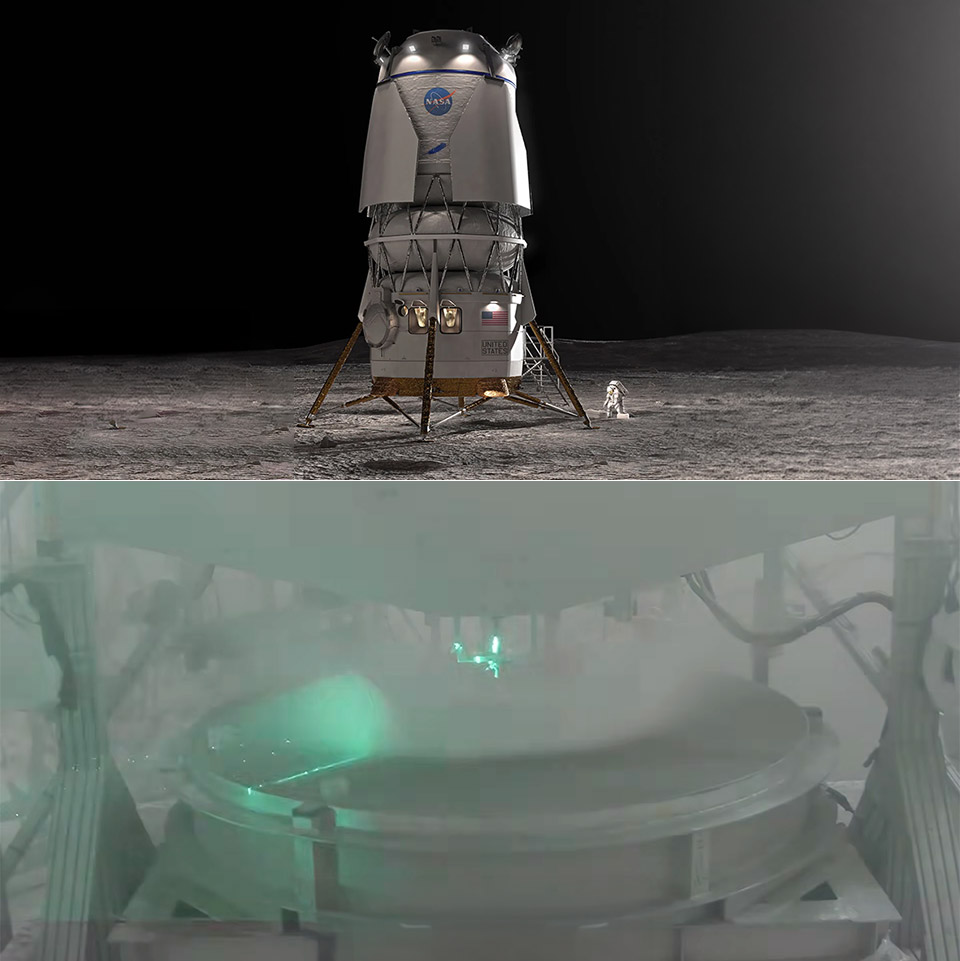
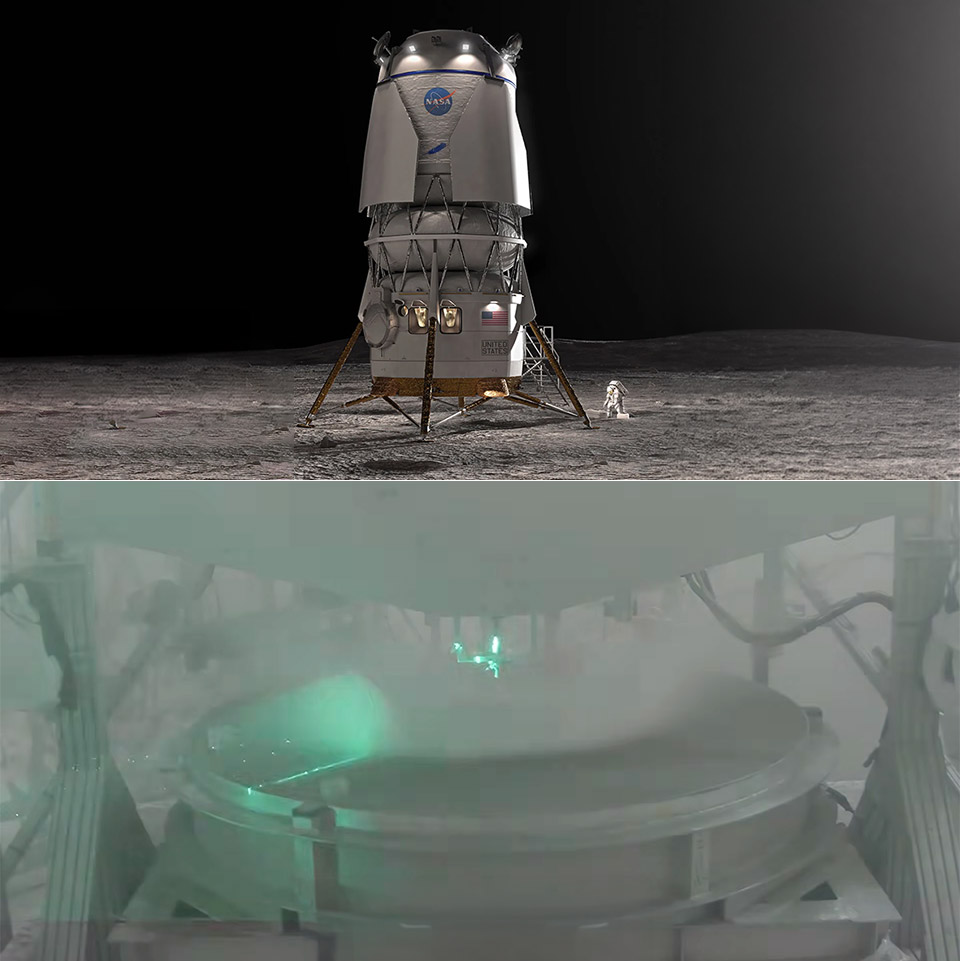
Inside a 60-foot steel sphere at NASA’s Langley Research Center in Hampton, Virginia, a team has begun a new series of tests that look simple on paper and get complicated fast. They fire scaled rocket exhaust into a shallow bin of jagged gray powder that stands in for lunar soil. Each run lasts about six seconds. Cameras and sensors record crater shape, how high and wide the flying sheet of dirt rises, where the particles land, and how fast they travel. That data will help keep future landers, astronauts, and nearby hardware from getting sandblasted when real engines light on the Moon.
Ashley Korzun, Langley’s test lead and principal investigator, described the most recent study as the most sophisticated plume-surface test operation yet conducted in vacuum chamber. A spacecraft that kicks up a lot of regolith during landing, which we all know will happen, will return part of it to the vehicle. Even more of it will spread and find its way to payloads, science instruments, and, eventually, rovers. Understanding physics is critical for crew safety and mission success.

LEGO Icons Hubble Space Telescope 11382
- EXPLORE THE HUBBLE SPACE TELESCOPE – Celebrate one of humanity’s greatest scientific feats while enjoying a relaxing building experience with the…
- REPLICA SPACE MODEL – Recreate the legendary space-based telescope with posable solar arrays and antennas, an opening aperture door and a detailed…
- AUTHENTIC DETAILS – Remove the exterior panels to reveal a detailed instrument bay, which features gyroscopes alongside primary and secondary…
The simulant left in the bin to act out the Apollo landing is called Black Point-1, and it comes from a volcanic region in Arizona. It matches the rough, grippy texture of true lunar dirt far better than regular sand. The bin is a respectable size, measuring six feet six and a half inches broad and one foot deep. The researchers perform a lot of hand loading before sealing the big sphere to near-vacuum so that the exhaust can expand as it would on the airless Moon, and, of course, experiments are run at varying heights to cover the various stages of a landing or departure.
Two prop systems share the schedule and are tested in turn. First, NASA Stennis Space Center created an ethane plume simulator, which was developed and run at Purdue University. This contraption generates approximately 100 pounds of thrust, which is more than enough to raise a human, and here’s the genius part: it heats the gas without really burning it. Later in 2026, a hybrid rocket motor from Utah State University, 14 inches long and 3D-printed, will take over. This motor has already been tested at Marshall Space Flight Center and combines solid propellant with gaseous oxygen. It then produces approximately 35 pounds of extremely hot exhaust. Both methods enabled the team to acquire a wealth of relevant data under a variety of scenarios without having to wait for the appropriate size fly engine to become available.
According to Daniel Stubbs, an engineer with NASA’s human landing systems plume team at Marshall, the campaign was one of the most relevant and thoroughly instrumented plume-surface series ever undertaken. Langley’s data will simply feed into the predictive models, which will tell us what happens when a lander touches down or lifts off again. Those models must be used for the next batch of vehicles that will travel to the lunar south pole on Artemis IV, which is scheduled for early 2028. Unlike the Apollo modules, which left their descent stages behind, the new landers will use the same engines to depart the surface and rendezvous with Orion in orbit, and, of course, those engines must be operational before the second firing can occur.
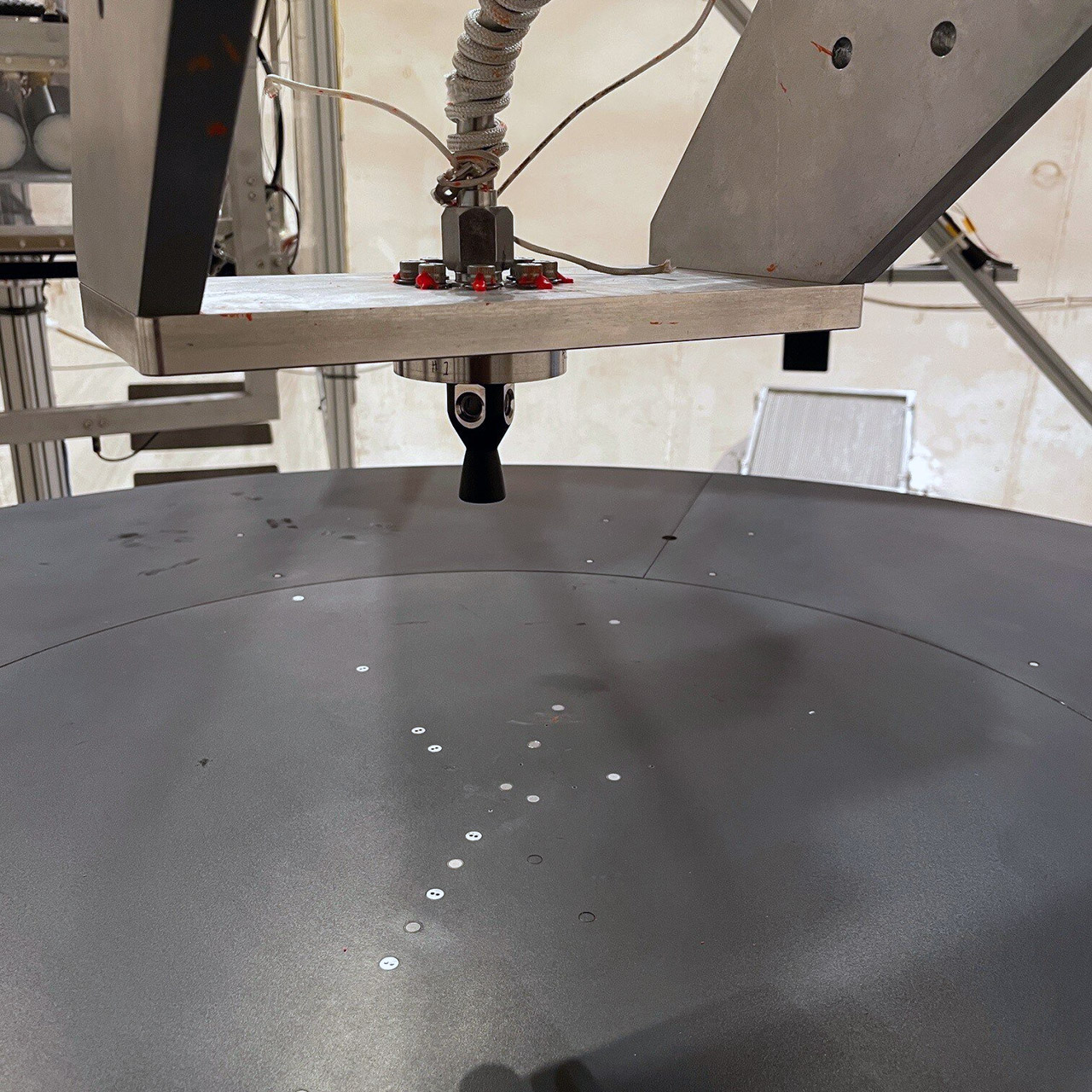
Photo credit: NASA/Wesley Chambers
A modified version of the SCALPSS stereo camera system, which previously flew on Firefly’s Blue Ghost Mission-1 in 2025, monitors each run. These cameras, coupled with a variety of additional sensors, provide researchers with a three-dimensional perspective of how the surface changes in real time. And the same equipment can be used on any old commercial landers in the future to validate ground models against actual real-world results on the Moon.
Six Seconds of Controlled Blast, NASA Starts Firing Into Fake Moon Dirt for Artemis IV
#Seconds #Controlled #Blast #NASA #Starts #Firing #Fake #Moon #Dirt #Artemis