A Computer That Disappears Into an Altoids Mint Tin
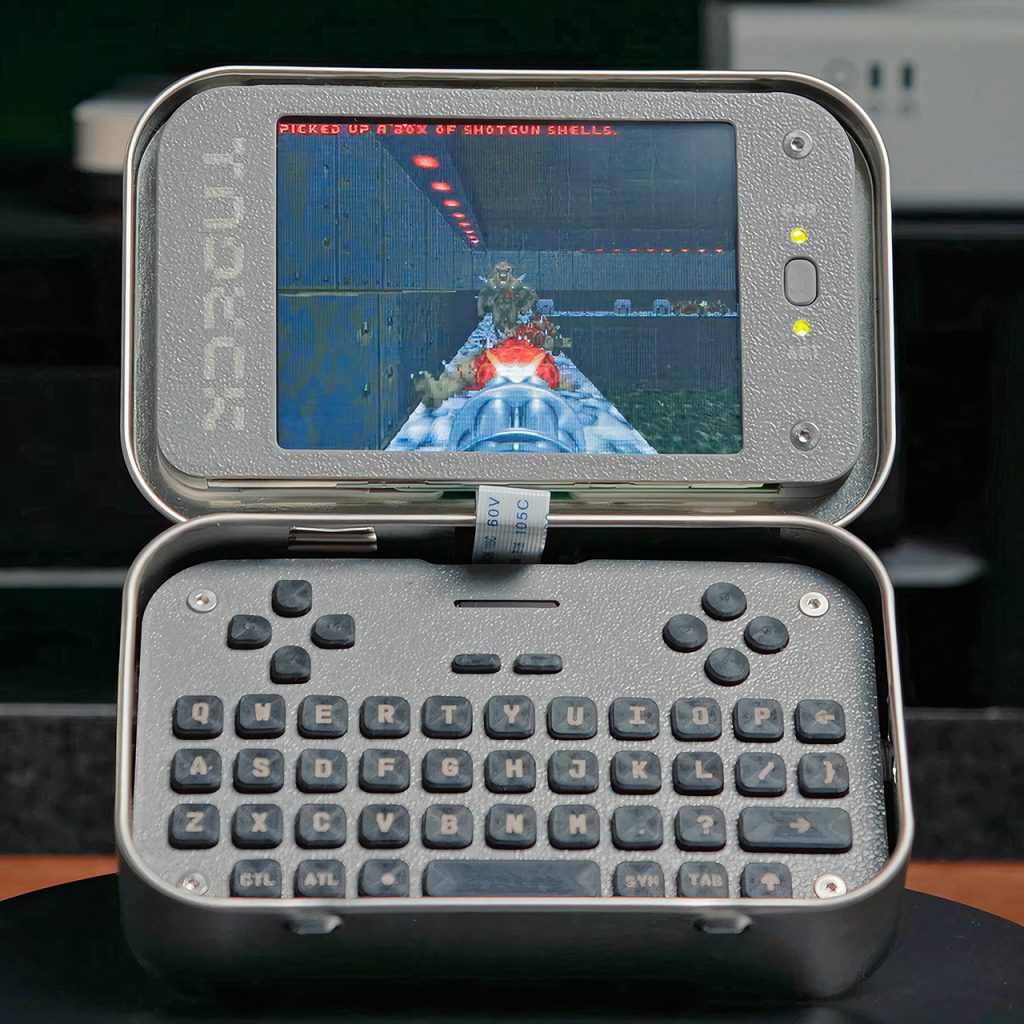
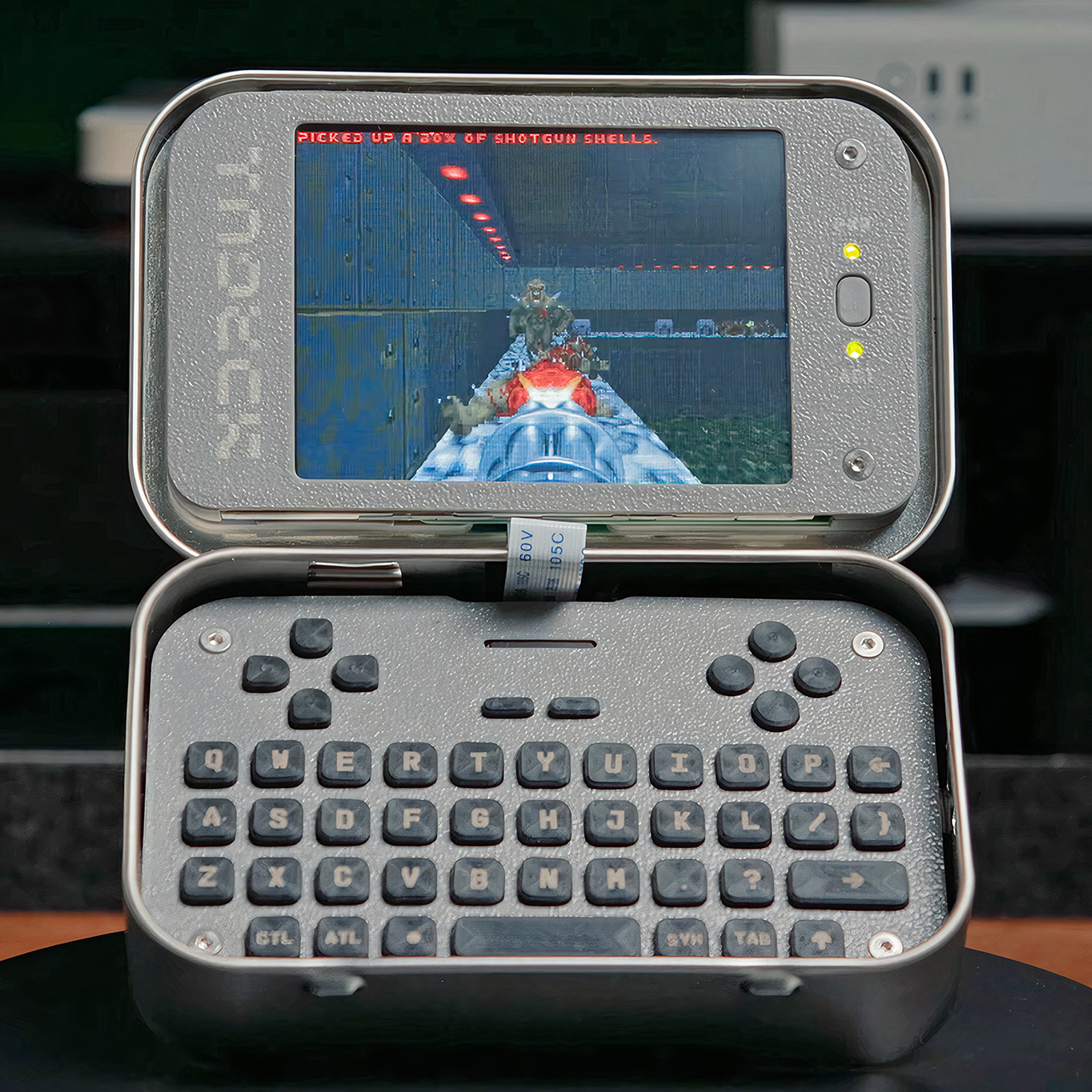
Salim Benbouziyane looked at an empty Altoids tin and decided it should hold an entire working computer. Not a toy, not a partial gadget, but a real cyberdeck with a screen, keyboard, battery, audio, and enough power to run software, including DOOM. He documented the entire process in a video that walks through design, board layout, soldering, troubleshooting, and final assembly.
Cyberdecks usually fit snugly into ammo cans or Pelican boxes, but makers have traditionally used Altoids tins as a suitable metal enclosure for smaller projects. While many have used one as a small project, just a few have managed to build a functional portable computer within one. Benbouziyane viewed it as a challenge, drawing inspiration from previous MintyPi handhelds and an Altoids tin cyberdeck expertly created by Exercising Ingenuity. His goal was to fit everything into the container while keeping the lid tight. It appears simple on paper, but the execution is anything but.
Sale

ACEMAGIC K1 Mini PC Windows 11 Pro, AMD Ryzen R2544 8GB DDR4 RAM 256 SSD M.2 3.7GHz (Beat 4300U/3500U…
- Powerful AMD Ryzen Embedded R2544 CPU Boasting 4C/8T, 4MB L3 Cache, 3.35GHz base & 3.7GHz boost clock. Pre-installed 8GB DDR4 RAM with dual slots…
- Dual M.2 Expandable Storage Built-in 256GB M.2 SSD + two M.2 2280 slots, max total storage up to 4TB for your photos, videos and work files.
- Triple 4K Multi-Screen Output HDMI 2.0 + DP 1.4 + Type-C (DP video) support 3 monitors simultaneously. Single screen runs 4K@60Hz; triple screens…
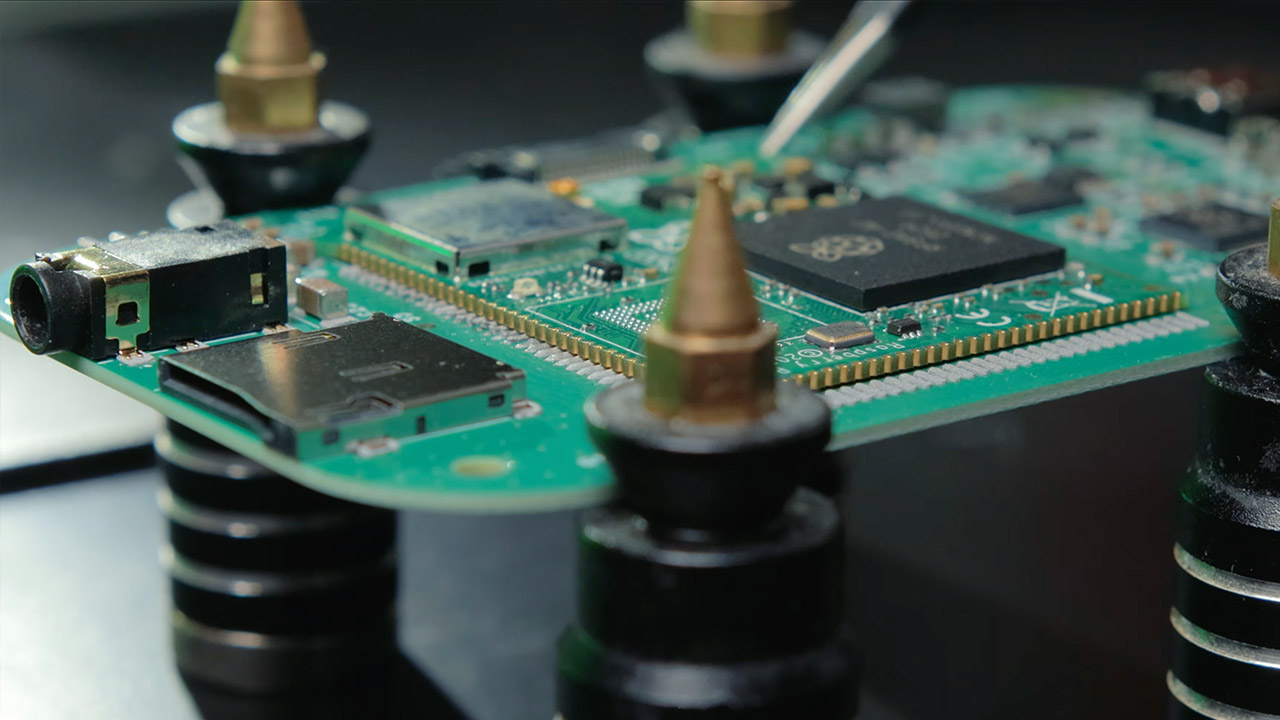
He started with the Raspberry Pi Compute Module Zero. This time, he chose the lighter version, which lacks built-in storage. The module packs a punch and performs on par with a Raspberry Pi Zero 2 W, but it comes in a very compact box free of all the normal mass of ports. The difference in size made the tin possible. Next came a custom two-layer carrier board, which served as the overall basis. He installed power management components such as a single-cell charger and a boost converter, a battery fuel gage, a soft-latch circuit that allows the entire system to be turned on and off with a single button, a microSD card slot, and an audio DAC that powers the tiny speaker and a headphone jack.
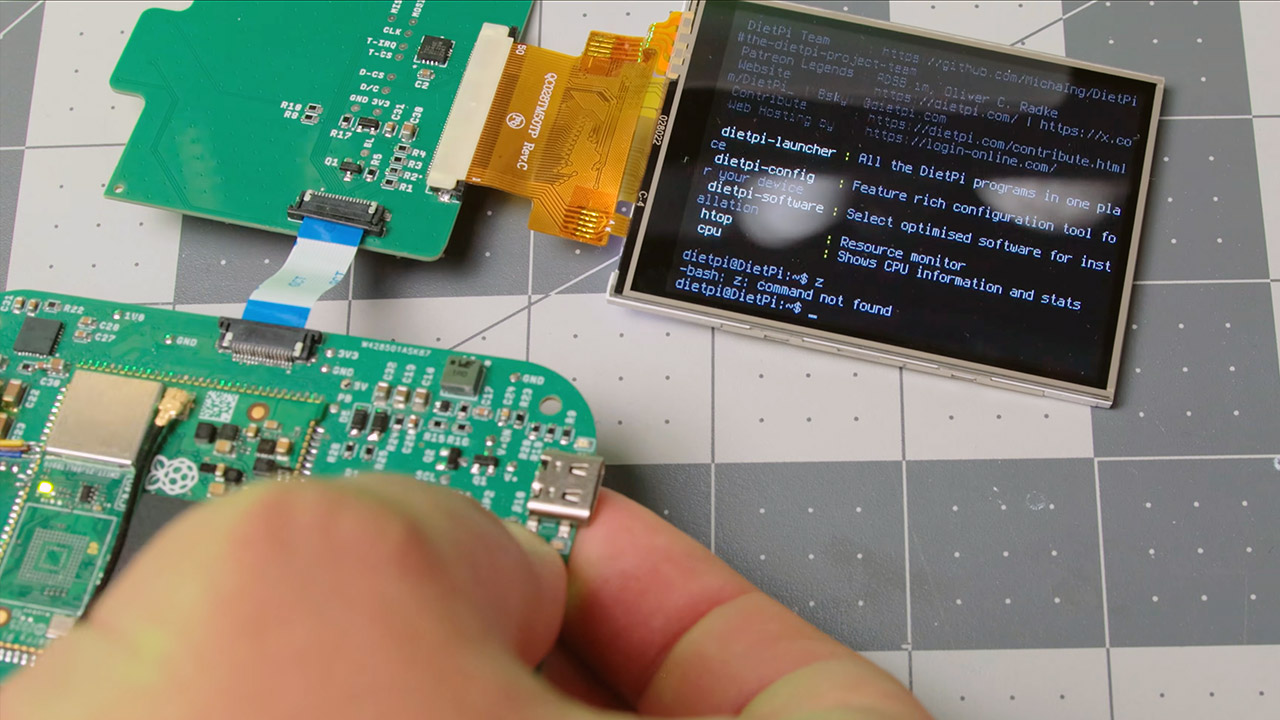
The second board took care of the 2.8-inch resistive-touch LCD. A flat ribbon cable delivers the display signals, power, and even the power button and LED lines over the tin’s hinge. A third blank board was just a spacer, while the fourth housed the keyboard matrix. Benbouziyane used an RP2040 microcontroller for the keys, added a USB multiplexer so that the same port could be used to update firmware or communicate with the Compute Module, and designed a compact arrangement for the tactile switches based on other small devices. To save space, he left out diodes. He applied a flexible membrane to the switches, and laser-engraved keycaps completed the look.
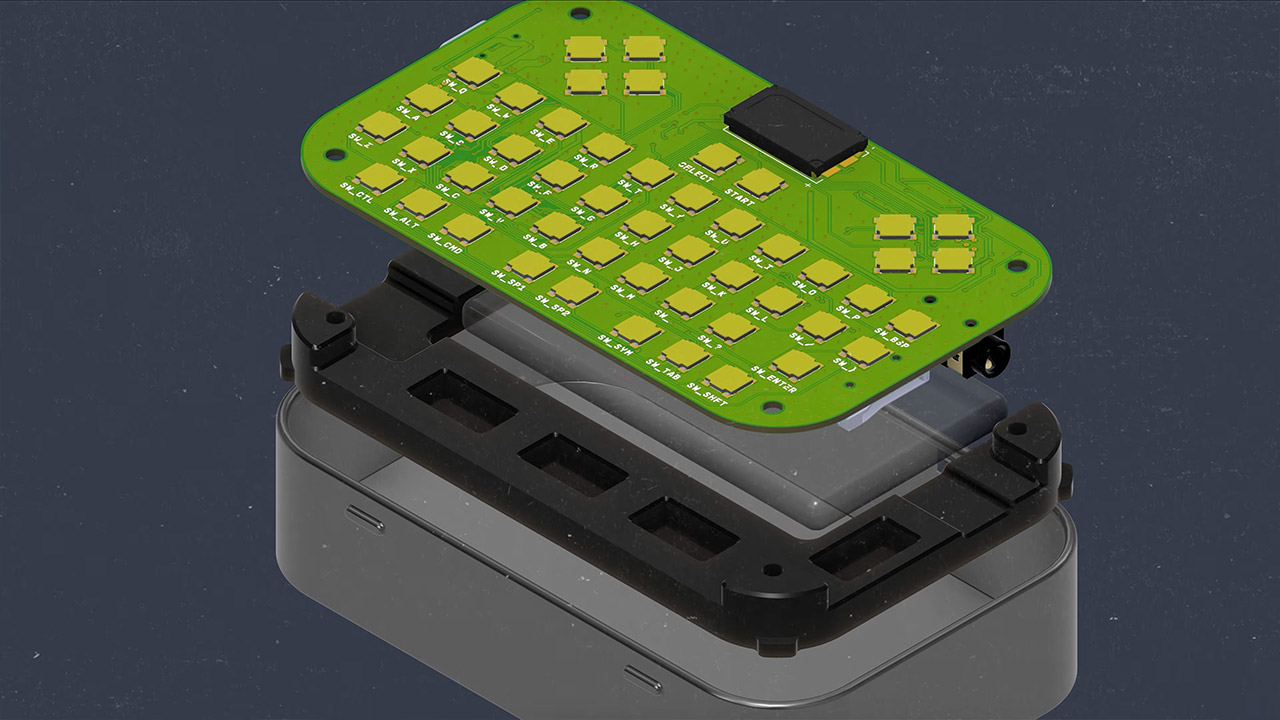
A 1200 mAh lithium cell serves as the power source. However, because the processor is so close to the battery, he had to devote special care to heat control. A basic heat-spreading board helps to direct heat away from the processor. Wi-Fi and Bluetooth required an extra U.FL antenna to be soldered in place because the module did not have one. Drilling the tin for USB, audio, and microSD apertures required a specialized jig and a sacrificial piece of metal to prevent the thin walls from being damaged. The keyboard plate, display bezel, and internal supports are all 3D-printed pieces made of PLA and TPU. To keep everything secure without getting in the way, he used magnets and M2 inserts, allowing the entire system to open and close smoothly.
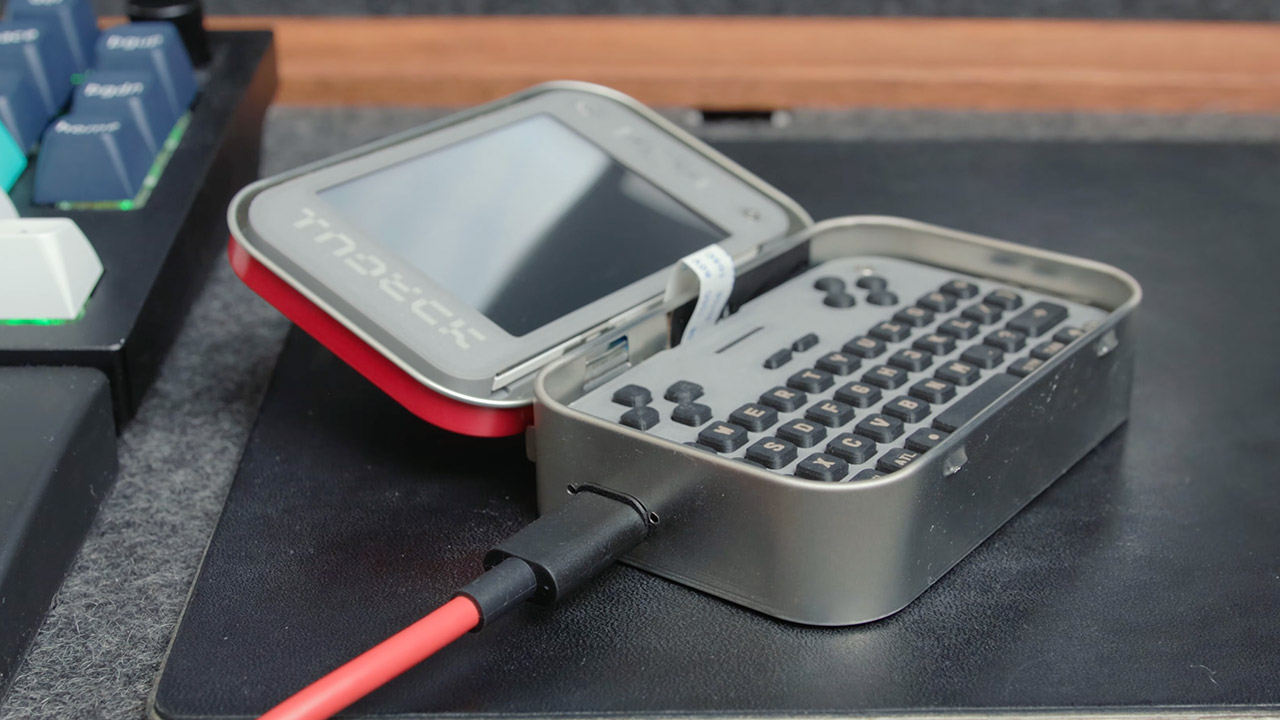
Benbouziyane is already developing the next version, which will feature a mechanical power switch, tighter power management, improved lid retention, larger key switches with longer travel, and a multi-layer board to increase thermal performance. For the time being, however, the current build serves as a complete, self-contained cyberdeck that could previously only be envisaged by anyone who looked at an empty mint tin.
[Source]
A Computer That Disappears Into an Altoids Mint Tin
#Computer #Disappears #Altoids #Mint #Tin