Diamonds Melting at Pressures Past Neptune’s Core
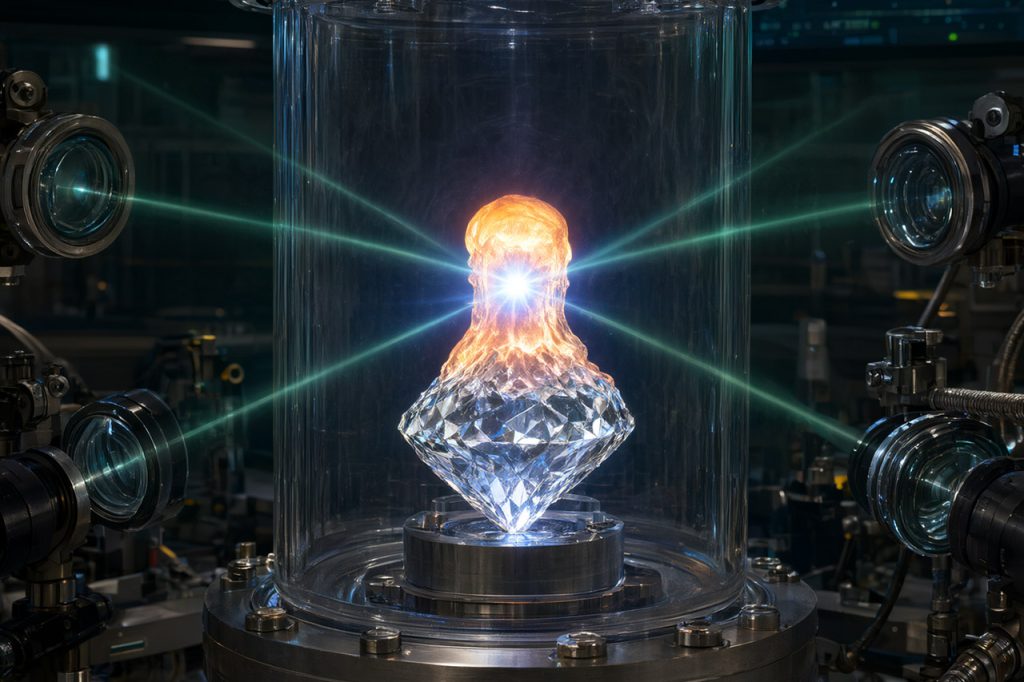
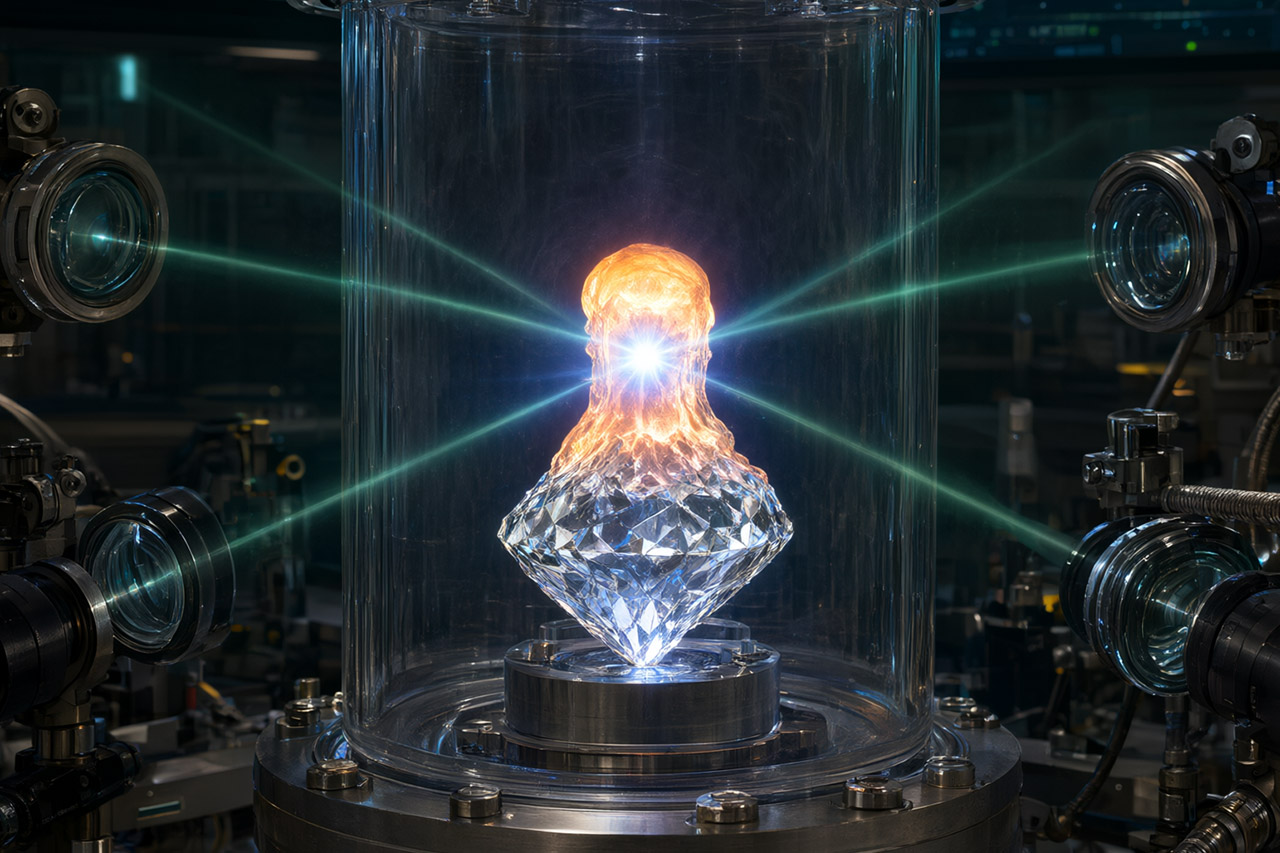
Scientists just forced diamond to melt under forces greater than anything found at the centers of Neptune and Uranus. The work settles a twenty-year argument between lab results and computer models, and it may help fusion experiments produce far more energy from the same laser pulse.
Researchers at Lawrence Livermore National Laboratory blasted small samples of synthetic diamond with the University of Rochester’s high-powered Omega laser. The intense laser flash vaporizes the diamond’s outer surface in less than a billionth of a second. During that short period of time, the diamond becomes hotter than the sun’s surface and is subjected to crushing pressures nearly three times those seen at the Earth’s core. Using new diagnostic procedures, they were able to detect the speed of the shockwave, the light the sample was emitting, its reflection, its density, and, for the first time, its atomic structure with X-rays.

LEGO Icons Hubble Space Telescope 11382
- EXPLORE THE HUBBLE SPACE TELESCOPE – Celebrate one of humanity’s greatest scientific feats while enjoying a relaxing building experience with the…
- REPLICA SPACE MODEL – Recreate the legendary space-based telescope with posable solar arrays and antennas, an opening aperture door and a detailed…
- AUTHENTIC DETAILS – Remove the exterior panels to reveal a detailed instrument bay, which features gyroscopes alongside primary and secondary…
Carbon atoms do not scatter X-rays well, thus the diffraction signal was weak, but modern detectors captured intricate patterns. They showed that even when the diamond melted, the atoms stayed in the classic cubic structure for which it is recognized. There was no sign of the other crystal type expected to form before the melting threshold, known as BC8. It appears that the atoms did not have enough time to realign under pressure as they migrated from the diamond lattice to the liquid state.
When the diamond melted, it was discovered to be at an incredible 7,300 degrees, less than a thousand degrees lower than what had been detected in previous studies, and it ultimately matches up well with the quantum theory estimates. What’s particularly remarkable is that when diamond melts, the resulting liquid is denser than the solid, so a solid diamond would practically float on top of a pool of molten carbon, much like an ice cube does in water. To make matters even stranger, the melting point of diamond begins to decline as pressure increases, echoing the unusual things that happen with water.
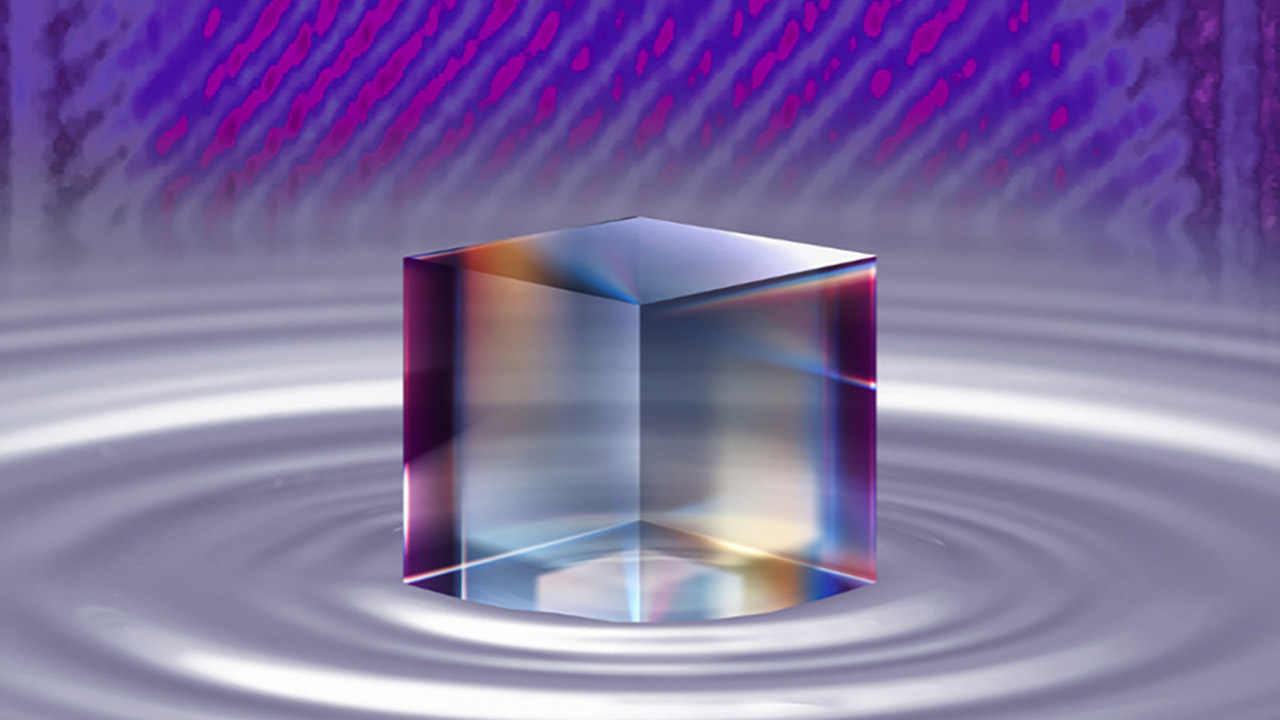
Photo credit: James Wickboldt/LLNL
Jon Eggert initially noticed the density increase over twenty years ago, and the new X-ray evidence verifies it directly. Marius Millot, who led this latest campaign, points out that because the shockwave is so fast, the diamond remains locked into its diamond structure, whereas different compression paths could lead to different routes, but the path that has been taken in many experiments is now much better defined.
At the National Ignition Facility, inertial confinement fusion is based on a thin diamond shell, and the entire process is dependent on it turning into a smooth liquid before the fuel inside reaches those extremely high ignition conditions. Scientists previously believed that a strong first jolt was required to totally melt it, but the new melting curve demonstrates that a milder initial knock can do the job. It appears that a slower shock makes the fusion fuel more compressible. With the new data, models suggest that the same laser energy can produce up to three times the fusion yield, if other losses are maintained under control.
As you look further out into the solar system, the same numbers help to tighten the models we use to predict ice giants. It turns found that carbon can combine with hydrogen, oxygen, and nitrogen to form diamond deep within Uranus and Neptune. Over time, the diamond sinks, releasing heat and stirring up the planet’s innards, a process known as “diamond rain” among scientists. With lab data from extremely high-pressure tests, well beyond what is found at the centers of these planets, scientists now have a more solid foundation to work from when predicting how much diamond develops, how far down it falls, and how the planets cooled over billions of years.
[Source]
Diamonds Melting at Pressures Past Neptune’s Core
#Diamonds #Melting #Pressures #Neptunes #Core